The Architecture of Illusion: Inside Rome’s Secret Masterpiece
Behind the heavy wooden doors of a quiet Roman courtyard lies a 400-year-old architectural riddle. Built by a brilliant, volatile Baroque master, this astonishing optical illusion bends reality, challenges human perception, and remains one of Rome’s best-kept secrets. Discover the history, the art, and the hidden genius of Palazzo Spada.
Step into the Illusion: Where Rome Bends Reality
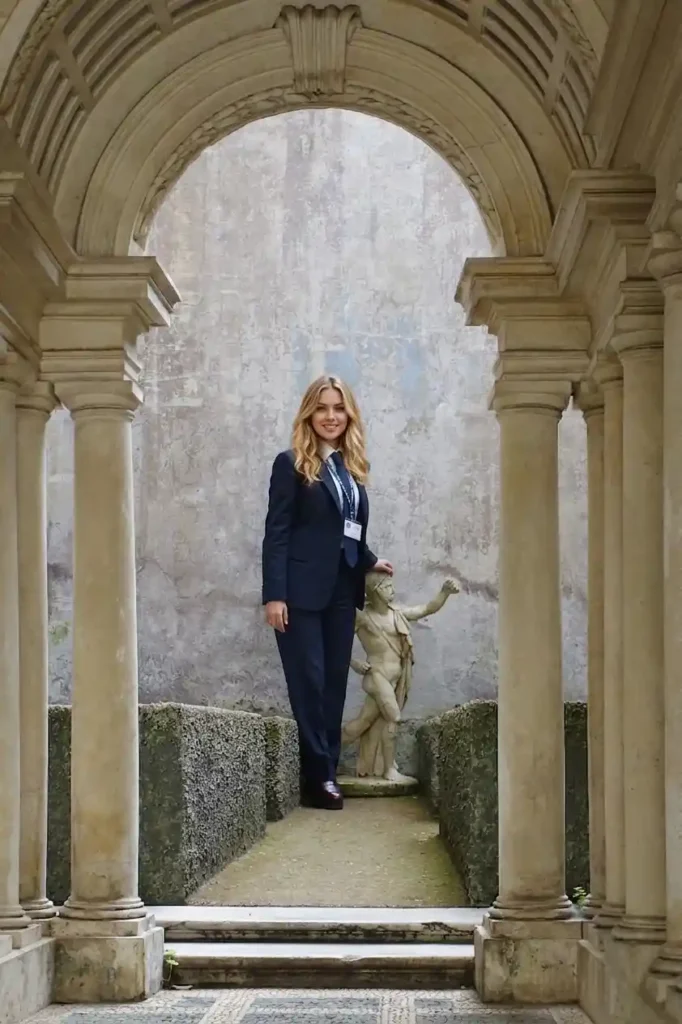
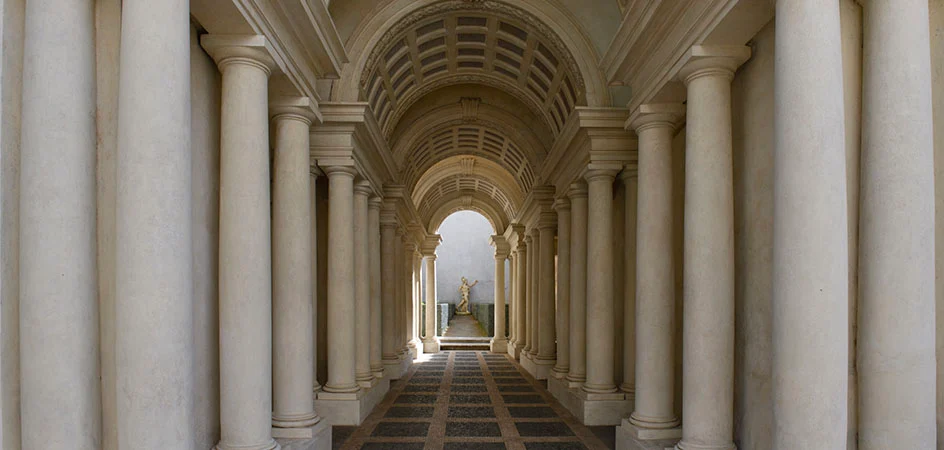
Tucked away from the roaring vespas and bustling market stalls of Rome’s Campo de’ Fiori lies a quiet courtyard where reality bends. To the untrained eye, the corridor stretching across the courtyard of Palazzo Spada looks like a grand, sixty-foot-long colonnade leading to a life-sized ancient statue of Mars standing proudly under the Roman sun.
But step closer, and the world recalibrates.
The gallery is not sixty feet long; it is barely twenty-eight. The heroic statue at the end is not towering over you; it is a modest two feet tall. The floor slopes upward, the ceiling slopes downward, and the flanking columns converge aggressively at a single, deceptive point.
This is the famous Borromini Perspective, a 17th-century mathematical optical illusion that distorts space and geometry. It serves as a breathtaking introduction to one of Rome’s best-kept secrets. While thousands of travelers queue for hours outside the Colosseum or the Vatican, this extraordinary Baroque palace remains a serene sanctuary for those seeking the true, hidden soul of the Eternal City.
A Palace of Power and Poetry
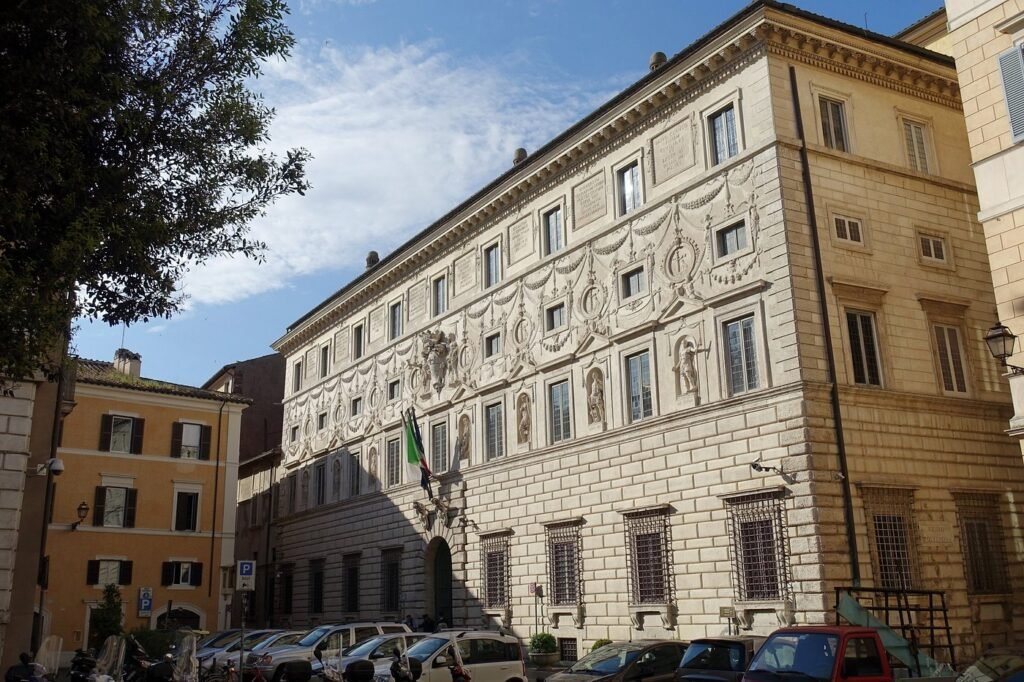
Originally built in 1540 for Cardinal Girolamo Capodiferro, the palace underwent a dramatic transformation when Cardinal Bernardino Spada acquired it in 1632. Seeking to assert his family’s influence and intellectual prowess during the height of the Baroque era, Spada hired the brilliant, volatile architect Francesco Borromini to renovate the property.
Borromini, a master of complex geometries and a fierce rival of Gian Lorenzo Bernini, transformed the building into a living canvas of Baroque philosophy. In the 1600s, art was not just meant to be beautiful; it was meant to evoke wonder (stupore) and deliver a moral lesson.
The forced perspective gallery, built between 1652 and 1653 with the help of the Augustinian mathematician Father Giovanni Maria da Bitonto, was a physical manifestation of a sobering Baroque truth: that earthly dimensions and worldly views are entirely deceptive. What looks grand and unyielding from afar is often small, fragile, and fleeting when viewed up close.
Inside the Galleria Spada: A Treasury of the Masters
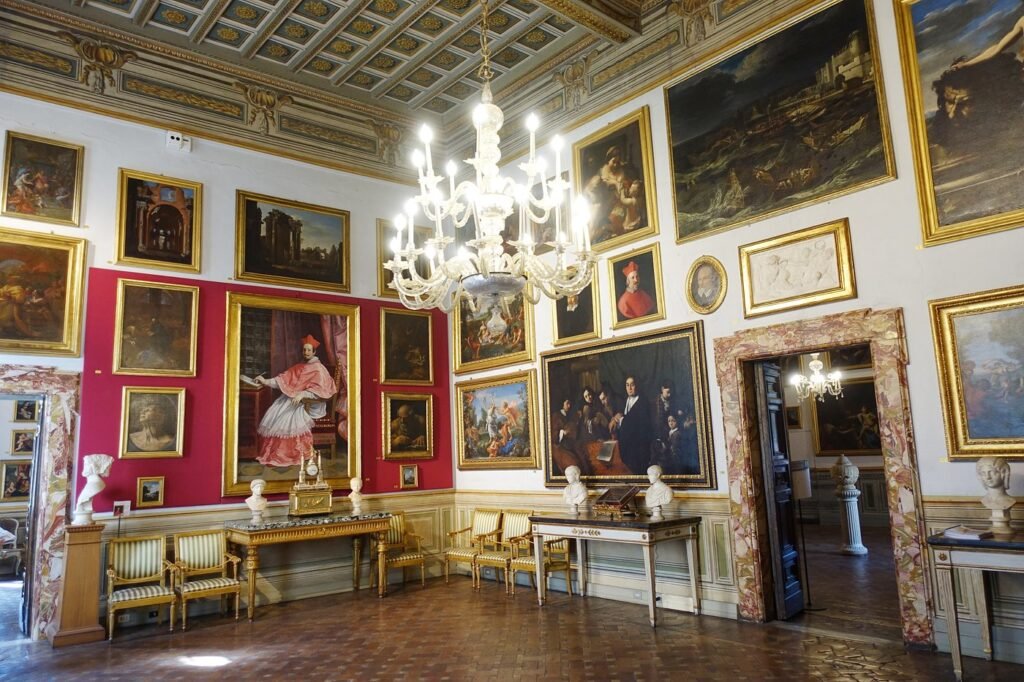
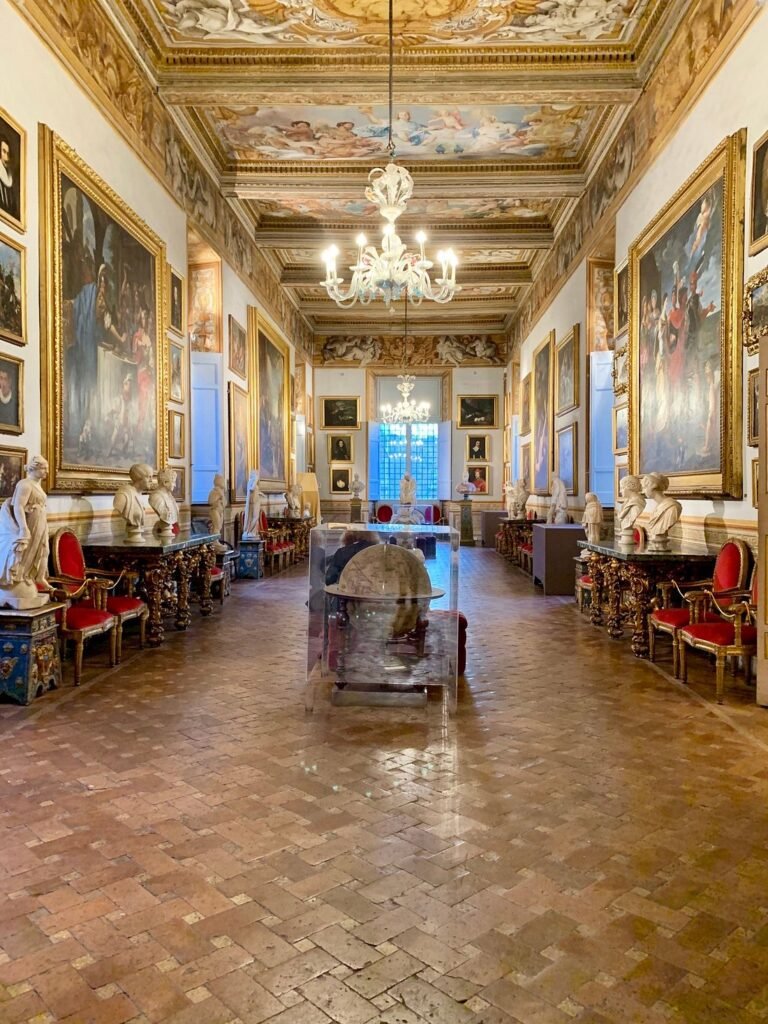
Beyond the architectural sorcery of the courtyard, the interior of Palazzo Spada houses the Galleria Spada, an art collection that feels less like a modern museum and more like a time capsule. Spread across four magnificent rooms, the gallery preserves the exact layout and atmosphere of a 17th-century aristocratic private collection.
Unlike contemporary galleries that isolate paintings on white walls, here canvases are stacked frame-to-frame, floor-to-ceiling, organized by size and symmetry rather than chronology. Sunlight pours through tall windows, illuminating dark oils and gilded frames just as it did four hundred years ago.
The walls are a roll call of Baroque genius:
- Artemisia Gentileschi’s fierce, dramatic rendering of Madonna and Child.
- Guido Reni’s ethereal, fluid brushwork.
- Titian’s brooding portraiture.
- Caravaggio-inspired masterpieces that play with chiaroscuro—the dramatic contrast between blinding light and deep, ink-black shadow.
Walking through these rooms is a masterclass in the Roman Baroque mindset, a period obsessed with drama, theatricality, and emotional intensity.
Exploring the Stuccoed Façade and Secret Gardens
Before leaving, one must spend time in the palace’s central courtyard. The exterior walls are decorated with some of the finest Mannerist stucco work in Italy. Statues of ancient Roman heroes—from Julius Caesar to Trajan—stand in niches, surrounded by intricate stone garlands of fruit, mythological centaurs, and heraldic symbols. It is a dense, visual epic poem carved directly into the stone.
The palace also boasts a rare treat in densely packed Rome: a fragrant secret citrus garden. Filled with bitter orange trees, the garden offers a quiet space to sit and reflect. The heavy scent of orange blossoms mixes with the damp smell of ancient stone, creating a sensory memory of Rome that lingers long after you return home.
Practical Tips for Your Visit to Palazzo Spada
To help you make the most of this architectural hidden gem, here is everything you need to know before you go:
📍 Location & How to Get There
Palazzo Spada is located at Piazza Capo di Ferro, 13, in the historic Regola district. It is a short, scenic five-minute walk from the bustling Campo de’ Fiori or the grand Palazzo Farnese. The nearest tram stop is Arenula/Cairoli (Tram 8), making it easily accessible from the Trastevere district or Piazza Venezia.
🕒 Opening Hours & Best Time to Visit
- Hours: The museum is open Wednesday through Monday, typically from 8:30 AM to 7:30 PM (closed on Tuesdays).
- Best Time: Aim for the early morning (around 9:00 AM) or late afternoon (around 5:00 PM). During these hours, you will often have the Borromini colonnade entirely to yourself, allowing you to appreciate the quiet genius of the space without the crowds.
🎟️ Tickets
Tickets are modest compared to Rome’s major attractions, usually costing around $10. Because it remains a true off-the-beaten-path destination, you rarely need to book weeks in advance, though reserving an online time slot on weekends is always a safe bet.