
The Monument Built to Vanish
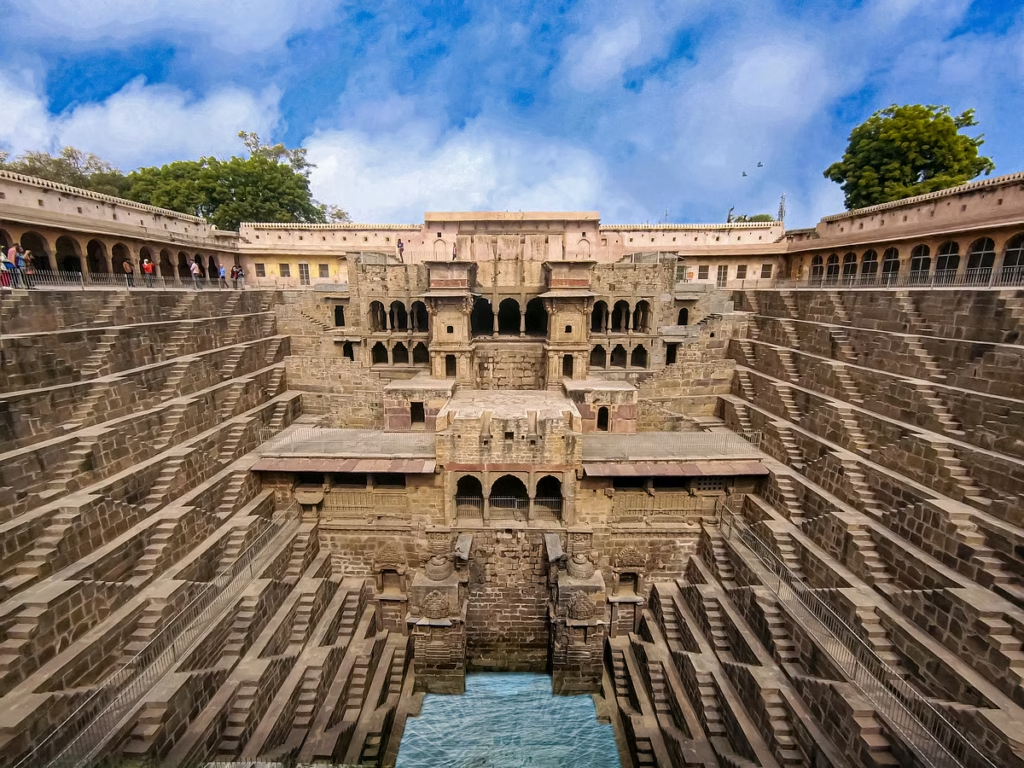
True architectural genius doesn’t always demand your attention; sometimes, it actively hides from it. When we think of historic monuments, our minds naturally tilt upward toward soaring spires, towering domes, and palaces that dominate the skyline. But in the arid, sun-slashed desert of Rajasthan, India, ancient master builders realized that the key to surviving a brutal climate lay in the exact opposite direction.
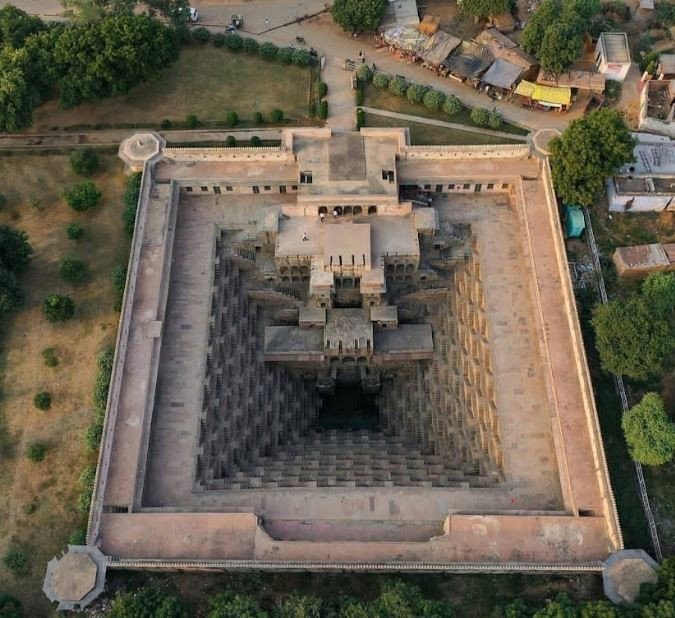
In the small village of Abhaneri sits Chand Baori—an architectural marvel of 3,500 perfectly symmetrical steps descending 13 stories into the dark womb of the earth. Unlike the Taj Mahal or Rajasthan’s famous hill forts, which aggressively reach for the sky, this ancient stepwell (baori) dives deep downward. It is a masterpiece of negative space, entirely invisible across the flat desert plains until you walk up and stand directly on its razor-sharp edge.
Engineering the Inverted Pyramid
Built in the ninth century by King Chanda of the Nikumbha dynasty, Chand Baori was born out of absolute environmental necessity. Rajasthan is a land of harsh extremes: months of searing, bone-dry heat followed by a brief, volatile monsoon season. To survive, the kingdom couldn’t just build a reservoir; they had to build an ecosystem that could catch every single drop of precious rainwater while keeping it from evaporating under a 115°F (46°C) sun.
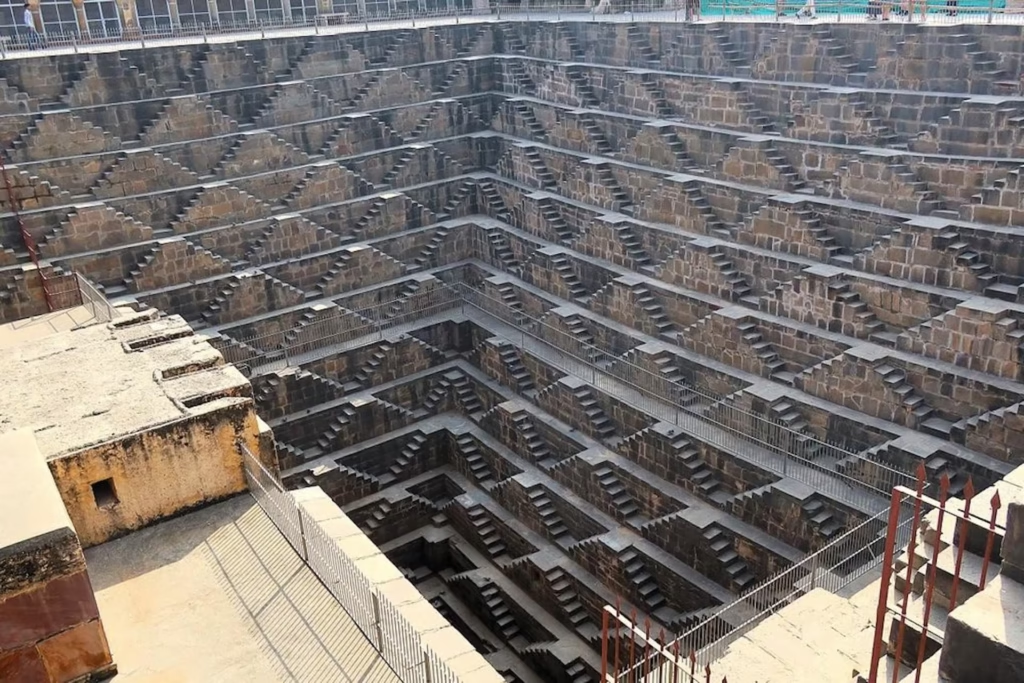
The solution was a brilliant exercise in subterranean engineering. The builders excavated a massive, inverted square pyramid. By structuring three of the four walls as a tight, interlocking weave of triangular stone steps, they achieved several structural triumphs at once:
- Evaporation Defense: By funneling the water down into a deep, narrow pool at the bottom rather than spreading it across a wide, shallow surface, they drastically minimized the surface area exposed to the sun and dry desert winds.
- Microclimate Cooling: As you descend the 100 feet into Chand Baori, the temperature drops by a staggering 5°C to 6°C (roughly 10°F). The deep stone walls block the searing horizon winds, trapping a pool of cool, refreshing air at the base.
- Infinite Accessibility: No matter how high or low the water level fluctuated throughout the changing seasons, the 3,500 precisely carved steps ensured that locals could safely walk down to the water’s edge from any side of the square perimeter.
The Social Architecture of Shadow
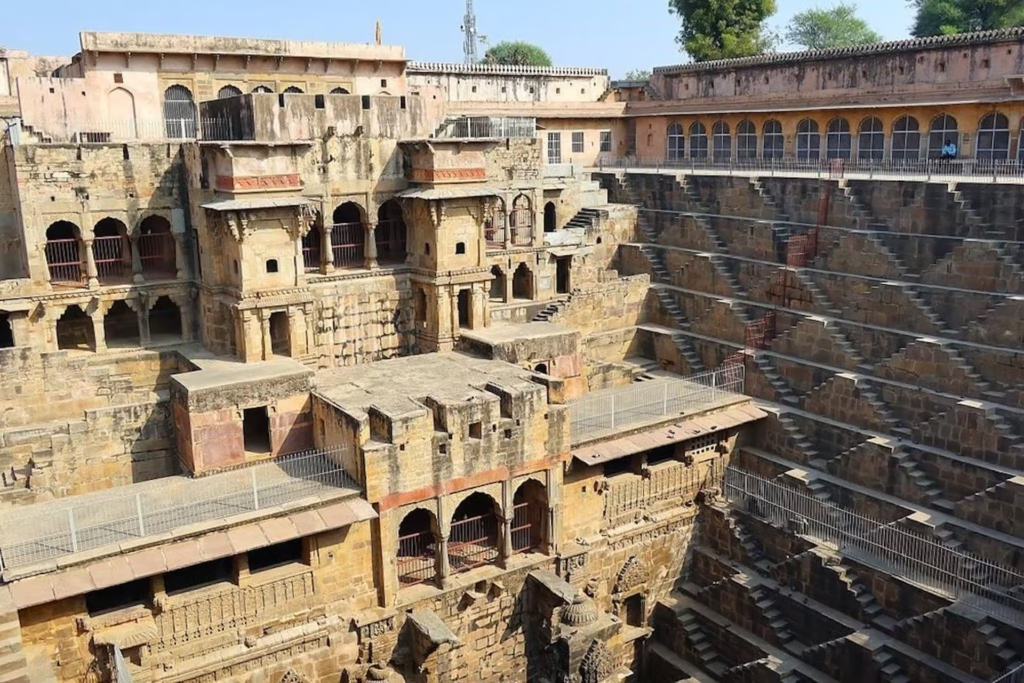
Chand Baori was never merely a utility pipe or a functional well; it was an epicenter of civic and spiritual life. The fourth wall of the stepwell breaks away from the geometric stairs to feature an ornate, multi-story pavilion carved with pillared galleries, arched balconies, and beautiful sculptures of the deities Durga and Ganesha.
During the height of summer, the royal family and community members would gather in these shaded alcoves to escape the oppressive heat, transforming a water-collection site into a living theater of community and rest.
The visual rhythm of the steps is so perfectly aligned that it creates an optical illusion. The shadows cast by the midday sun transform the stone walls into an intricate, shifting tapestry of light and dark triangles. It is a stunning visual reminder that in the ancient world, art and survival were inextricably bound together.
A Vanishing Legacy
For centuries, structures like Chand Baori kept India’s arid regions thriving. However, during the British colonial era, many stepwells were filled in or abandoned due to a lack of understanding of their traditional water-management systems, replaced by pipes and pumps that ultimately depleted the region’s deep water tables.
Today, Chand Baori is preserved as a protected historic site, no longer used for drinking water but celebrated as a high watermark of passive, sustainable design. It stands as a profound philosophical lesson wrapped in stone: that sometimes, the most resilient way to weather a storm or survive a harsh environment is not to stand tall against it, but to bow gracefully into the earth and let the world pass over you.
Practical Tips for the Desert Explorer
- Pair it with a Trip to Jaipur or Agra: Abhaneri is located roughly 95 km (60 miles) from Jaipur, right off the Jaipur-Agra highway. It makes the perfect, breathtaking two-hour detour if you are traveling between the Pink City and the Taj Mahal.
- Capture the Shifting Shadows: To see the geometric patterns at their absolute sharpest, visit during the mid-morning or early afternoon. As the sun moves directly overhead, the contrast between the stone steps and their sharp, triangular shadows creates a photographer’s paradise.
- Explore the Adjoining Temple: Don’t skip the Harshat Mata Temple located just a few steps away from the well. Built during the same era, it was partially destroyed in the tenth century but still houses fragments of incredibly intricate, ancient stone carvings that hint at the complex’s original grandeur.