The Italian Village Built on a Fabricated Myth
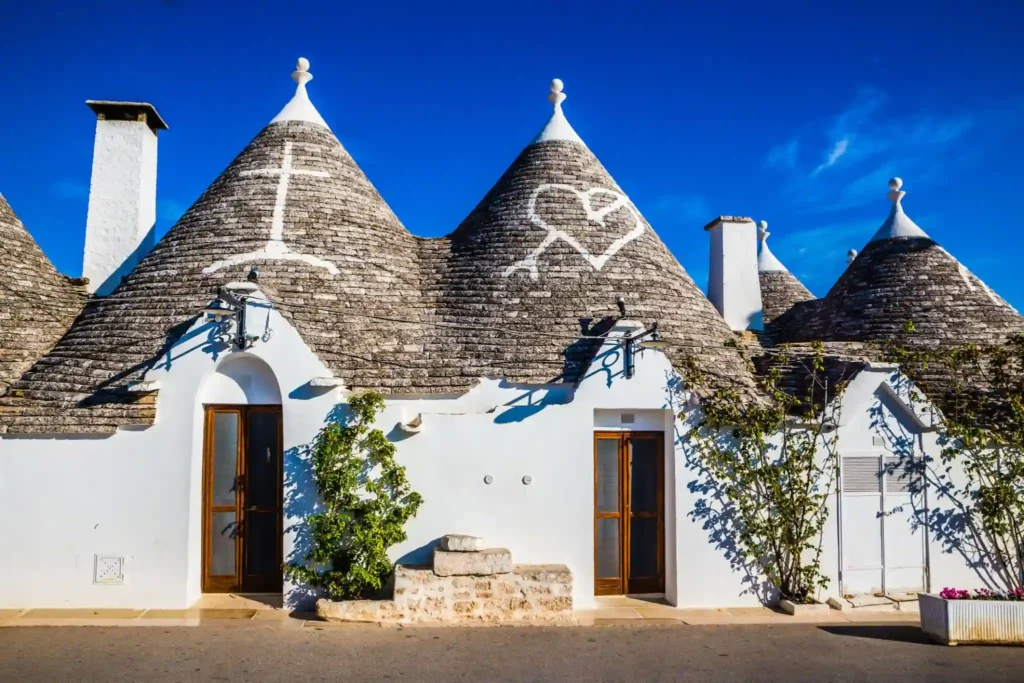
We naturally tend to view historical preservation as an act of pure romance—a deep, uninterrupted devotion to saving the past. But the whimsical, cone-roofed trulli of Alberobello, Italy, now a celebrated UNESCO World Heritage site and a darling of global travel itineraries, were not born from architectural passion or artistic vision. Instead, this entire town’s iconic identity was forged from a brilliant, high-stakes, and completely desperate tax loophole. Long before it was a tourist sanctuary, it was a community built on a masterfully executed lie: a village engineered to vanish into thin air at a moment’s notice just to keep a predatory royal court empty-handed.
The Day the Village Vanished
The midday heat of the 17th-century Apulian sun usually brought a heavy, rhythmic silence to the Valle d’Itria. But on this particular afternoon, the quiet was shattered by the frantic clatter of hooves echoing from the northern ridge, signaling the arrival of the Kingdom of Naples’ royal tax inspector. Down in the valley, a lookout shouted a single warning, and within seconds, hundreds of citizens erupted into a synchronized, desperate choreography. Men grabbed thick ropes, women hoisted infants alongside sacks of grain, and families scurried toward the tree line. Incredibly, they did not run to defend their homes—they ran at them. With a practiced heave, ropes tightened around peak stones, heavy mallets struck precise structural weak points, and with a deafening, grinding roar, the entire settlement of Alberobello collapsed into piles of dust.
Where dozens of homes had stood moments before, nothing remained but vast, anonymous mounds of white limestone rubble baking in the sun. By the time the tax inspector crested the hill, clipboard in hand to log new, taxable properties, his eyes met a completely desolate landscape. There were no illegal settlements to penalize, no roofs to count, and no citizens to tax. He found only a few bewildered shepherds standing among the debris, who swore with entirely straight faces that there was nothing there but the raw, unworked stones God had left behind.
The Tyrant of the Dry-Stone Valley
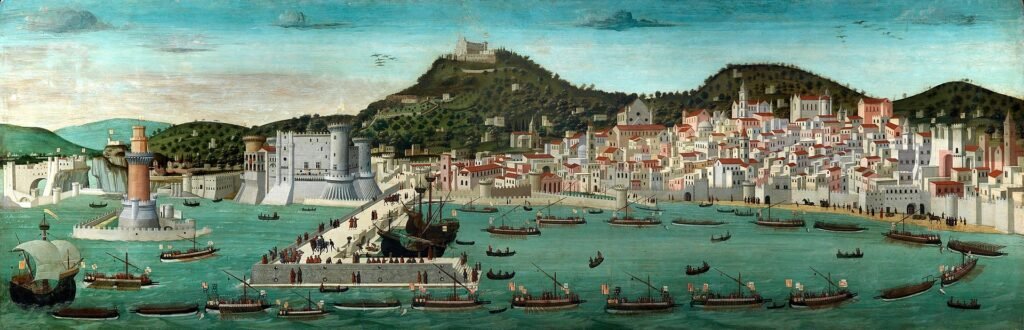
To understand how an entire town became a recurring disappearing act, one must look to the brutal economics of feudal Southern Italy. In the 1600s, the Kingdom of Naples ruled the region with a predatory financial grip. Chief among its royal decrees was the Pragmatica de Baronibus, a law stating that any baron or count who established a new town or permanent settlement on their fiefdom had to pay a massive, recurring tax to the royal court for every single roof under their jurisdiction.
Enter Giangirolamo II Acquaviva d’Aragona, known to history—and to his terrified subjects—as the “Pragmatic Count.”
Count Giangirolamo was a man of fierce ambition and zero desire to share his agricultural wealth with a distant king. He looked at the dense, rocky woods of the Alberobello region and saw an opportunity to clear the land, plant lucrative olive groves, and bring in hundreds of peasant laborers to cultivate them. But doing so legally meant paying a fortune in royal settlement fees.
The Count’s solution was a masterclass in malicious compliance. He decreed that his new labor force could settle the land, but they were strictly forbidden from using a single drop of mortar, mud, or binding agent to build their homes. They were forced to build exclusively with pietra a secco—dry stone.
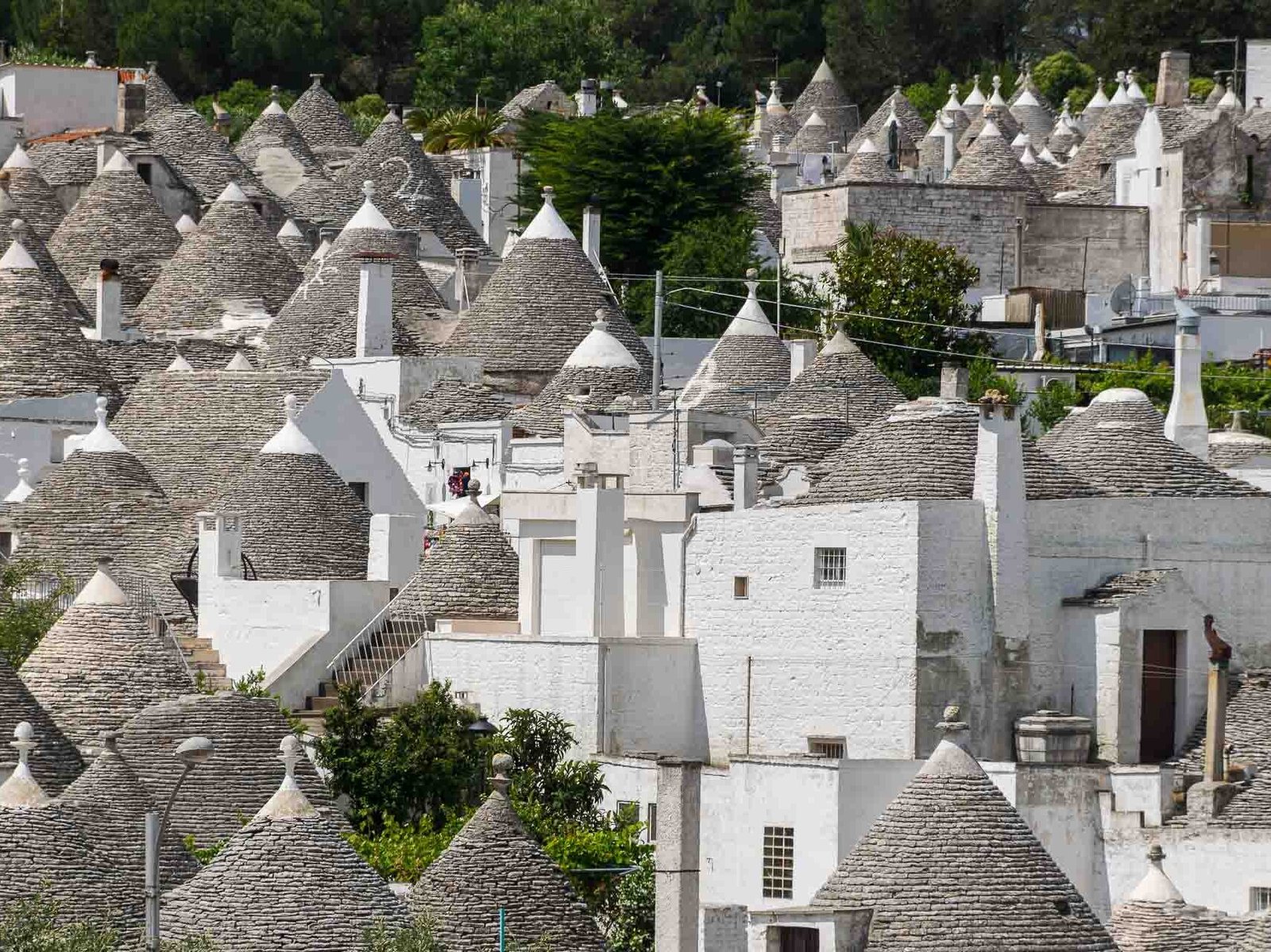
For the peasants, this was a grueling mandate. They had to clear the karst limestone from the fields by hand, break it into flat slabs called chiancarelle, and stack them sequentially in concentric circles, narrowing upward to form a self-supporting dome. It was a marvel of primitive engineering: a structure held together by nothing more than gravity, friction, and sheer balance.
But the architecture carried a dark, hidden purpose. These weren’t just homes. They were structural traps.
Built to Collapse
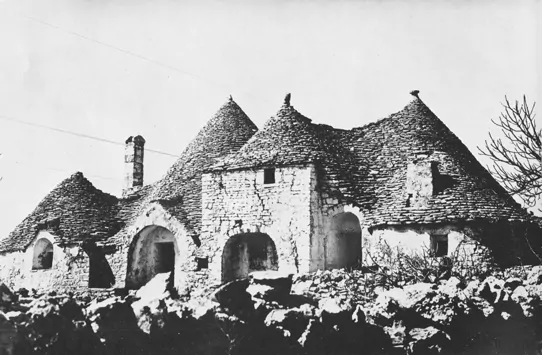
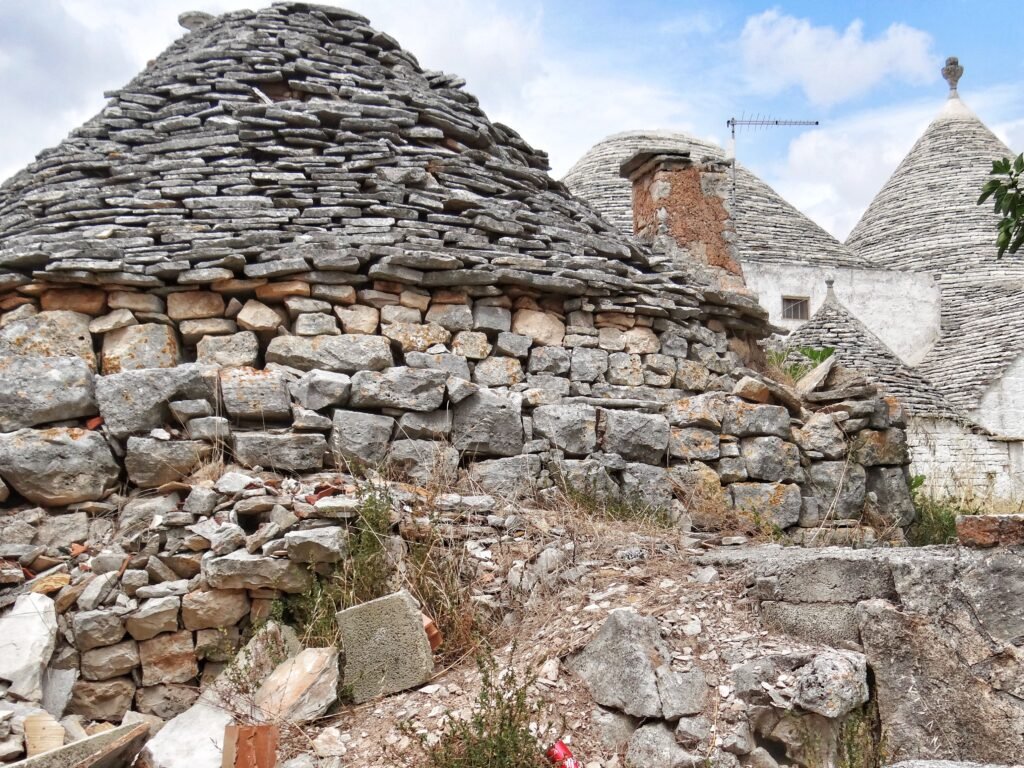
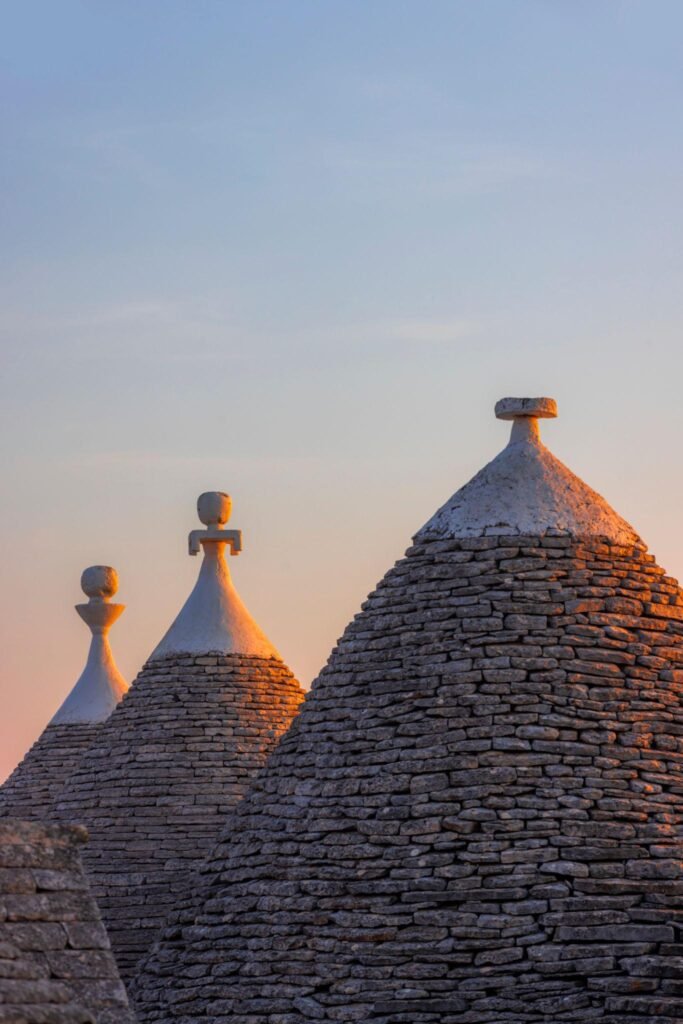
The magic—and the terror—of the original trullo lay in its keystone. At the apex of the conical roof sat a heavy, central stone, often capped with a decorative pinnacle. The villagers engineered these roofs so perfectly that the entire weight of the cone relied on the precise counter-balance of the stones pressing against this central point.
If you knew exactly which structural stone to pull, the integrity of the roof would instantly fail. The heavy limestone slabs would slide inward, cascading down like a deck of cards, transforming a habitable dwelling into an anonymous pile of field stones in less than five minutes.
“They lived in a constant state of structural precarity. Imagine cooking dinner, putting your children to bed, knowing that a single knock on the door from the Count’s riders meant you had to pull the pin on your own life.”
Whenever word reached the Count that the King’s inspectors were heading down from Naples to conduct a census and collect roof taxes, Giangirolamo’s enforcers would ride through the valley, issuing the command to demolish.
The villagers would systematically collapse their own homes. The elderly, the sick, and the newborns were carried out into the woods to hide among the ancient olive trees. For days, they would live exposed to the elements, watching from the brush as royal officials walked over the ruins of their kitchens, finding nothing but piles of cleared agricultural rocks.
The moment the inspectors turned their horses back toward Naples, frustrated and empty-handed, the true nightmare began again. The peasants had to return to the rubble and, using the exact same stones, rebuild their entire village from scratch before the winter rains or the summer heat destroyed what few belongings they had managed to salvage. It was an exhausting, unending cycle of creation and destruction, all orchestrated so a wealthy tyrant could keep his pockets full.
The Rebellion of 1797
For generations, the people of Alberobello endured this architectural purgatory. They were a ghost town by design, denied the dignity of permanence. If a peasant dared to use mortar to seal out the freezing winter drafts, the Count’s men would tear the house down as punishment. The village was trapped in a fabricated myth of transience.
But by the late 18th century, the winds of revolution were sweeping across Europe, and the people of the valley had finally had enough.
In the spring of 1797, a brave delegation of seven Alberobello citizens slipped away from the valley in the dead of night. They traveled to Taranto to meet with King Ferdinand IV of Bourbon. They laid bare the truth: they were a real, permanent town of over three thousand souls, hidden in plain sight, living in squalor and fear because of the Count’s tax evasion schemes.
King Ferdinand, eager to strip power and wealth from the troublesome Acquaviva line, listened. On May 27, 1797, he issued a royal decree granting Alberobello its freedom. It was officially designated a Città Regia (Royal City), liberating its people from the feudal grip of the Count.
The very first thing the citizens did when the decree arrived? They mixed sand, water, and slaked lime. For the first time in nearly two centuries, the people of Alberobello proudly, defiantly, bound their stones together with mortar.
From Structural Trap to World Heritage
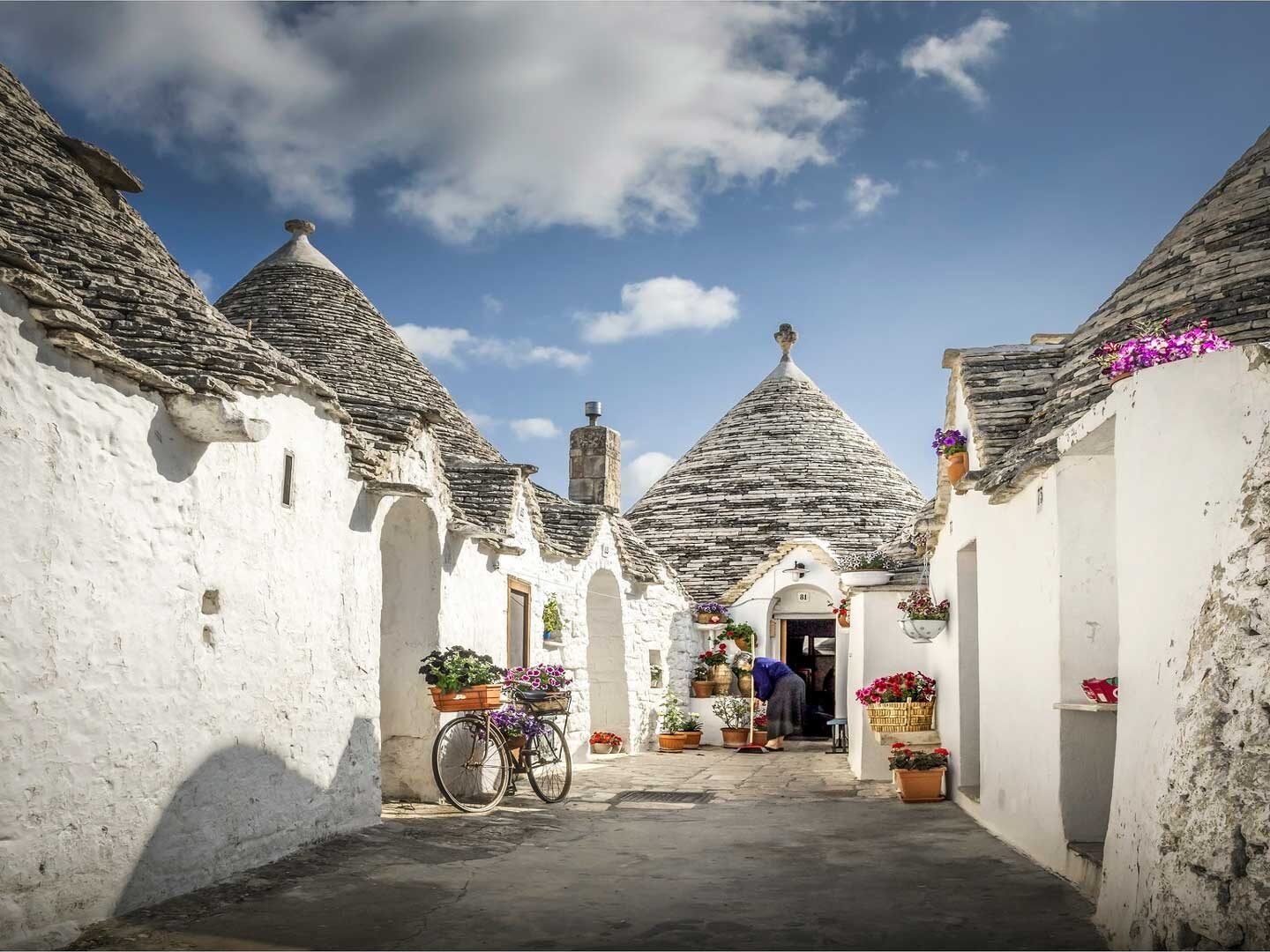
Today, walking through the Rione Monti district of Alberobello feels like stepping into a surreal, whitewashed fairy tale. Over fifteen hundred trulli crowd the hillsides, their conical roofs painted with mysterious, arcane symbols—crosses, planetary signs, and evil-eye protectors—that date back to the days when the villagers needed all the cosmic luck they could get.
Travelers from all over the world flock here to sleep under the cool, vaulted stone ceilings, marveling at the “quaint” and “picturesque” ingenuity of Apulian architecture. It is easy to look at the postcard-perfect streets and see only beauty.
But if you run your fingers along the rough, whitewashed limestone walls, you can still feel the contours of a deeper, invisible geography. These stones do not just tell a story of Italian charm; they hold the memory of an oppressed people who turned a landscape of scarcity into a weapon of survival. The whimsical cones of Alberobello are a monument to human resilience—a reminder that sometimes, the world’s most beautiful places are carved out of a brilliant, desperate lie.
| Era | Population Status | Structural Reality | Tax Implication |
| Early 1600s | Hidden labor force | Strictly dry-stone; easily collapsible | 0% paid to Naples; 100% kept by Count |
| Mid-1700s | Over 3,000 residents | Semi-permanent; secret reinforcing | Continued evasion via mass demolition |
| Post-1797 | Free Royal City | Mortar permitted; permanent construction | Standard royal taxation; legal recognition |
| Modern Day | UNESCO Heritage Site | Strictly protected historic monuments | Global tourism hub; invaluable cultural capital |