Samhain: The Ancient Celtic Festival That Gave Birth to Halloween

Ever wondered where Halloween really began? While we associate it today with costumes, candy, and carved pumpkins, the origin of Halloween stretches back over 2,000 years to the ancient Celtic festival of Samhain—once celebrated across what is now Scotland, Ireland, and Britain.
Samhain: A Night When the Veil Thinned
Over two thousand years ago, long before medieval castles or Christian saints, the ancient Celtic tribes of Ireland, Scotland, and Britain divided the year in two halves: light and dark, life and death; and Samhain (pronounced Sow-in) stood precisely at their meeting point. It fell between the autumn equinox and winter solstice, signaling the death of the old year and the birth of the new.
The festival carried deep meaning. It was the final harvest, a time to gather crops, bring livestock down from the hills, and prepare for months of cold and scarcity. Yet it was also mystical: a night when spirits could cross into the mortal world, and ancestors returned to visit their families.
Fires were lit on hilltops to guide these kind souls home, and to keep away the darker forces that might slip through the same opening. Every spark and shadow spoke of balance; between gratitude and grief, fear and hope, light and dark.
Rituals of Fire, Feast, and Fate
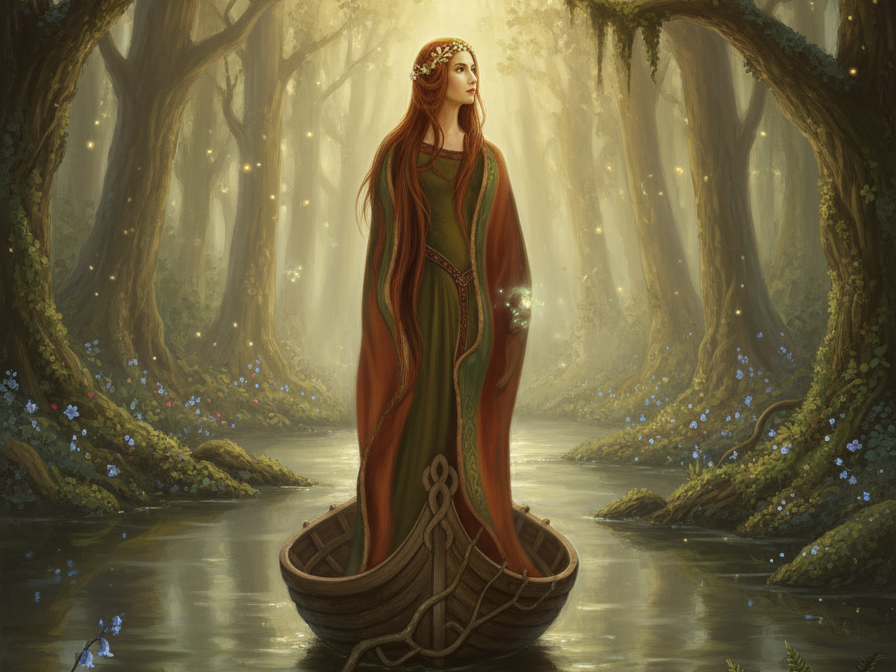
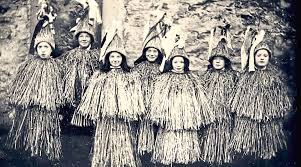
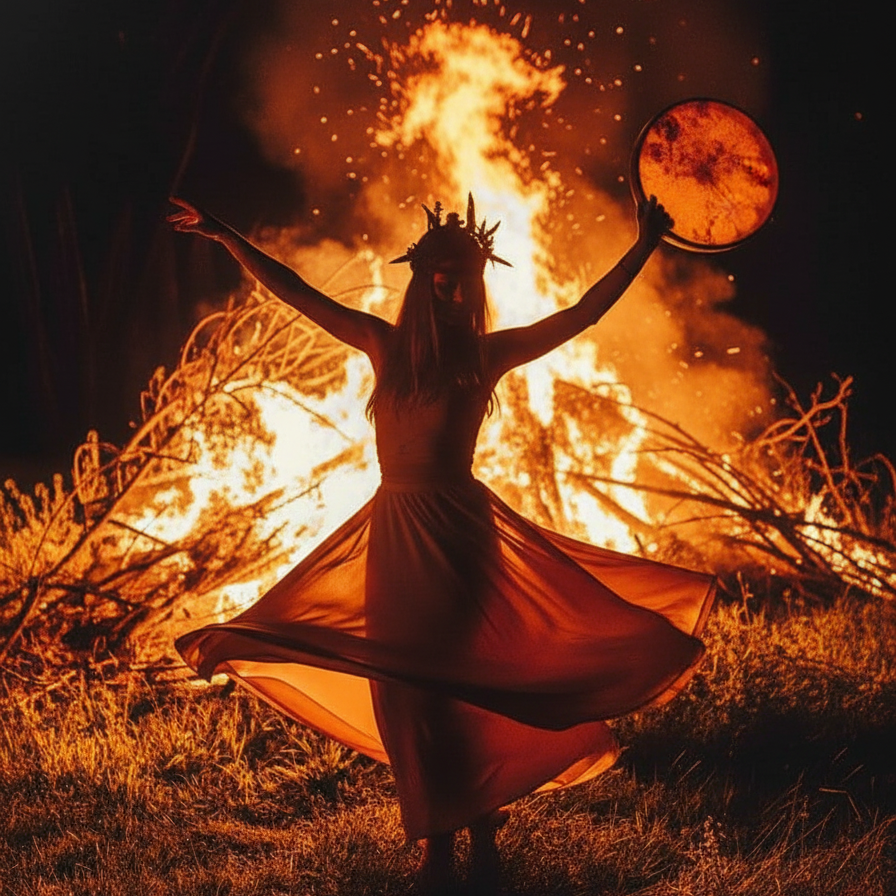
Samhain was both a celebration and a reckoning. Families feasted late into the night, setting a place at the table for ancestors and leaving offerings of food and drink for wandering spirits and the Aos Sí, the fairy folk who guarded the unseen world.
Great bonfires were kindled in every village, symbols of protection and renewal. People leapt through the flames for good fortune and carried home burning embers to rekindle their hearths, a literal spark of the communal fire, that once marked the origin of Halloween across the Celtic lands.
With the world between worlds, divination was common. Young people bobbed for apples or cast nuts into the fire to foresee love and fate, playful echoes of older Celtic oracles.
And then there was guising; disguising oneself in rough clothing or animal skins to confuse or scare away spirits. Over centuries, that practice crossed the sea and softened into something familiar: children in costume, knocking on doors for treats. Halloween, even now, carries a glimmer of Samhain’s ancient disguise.
Ireland: Where Fire Met the Gods
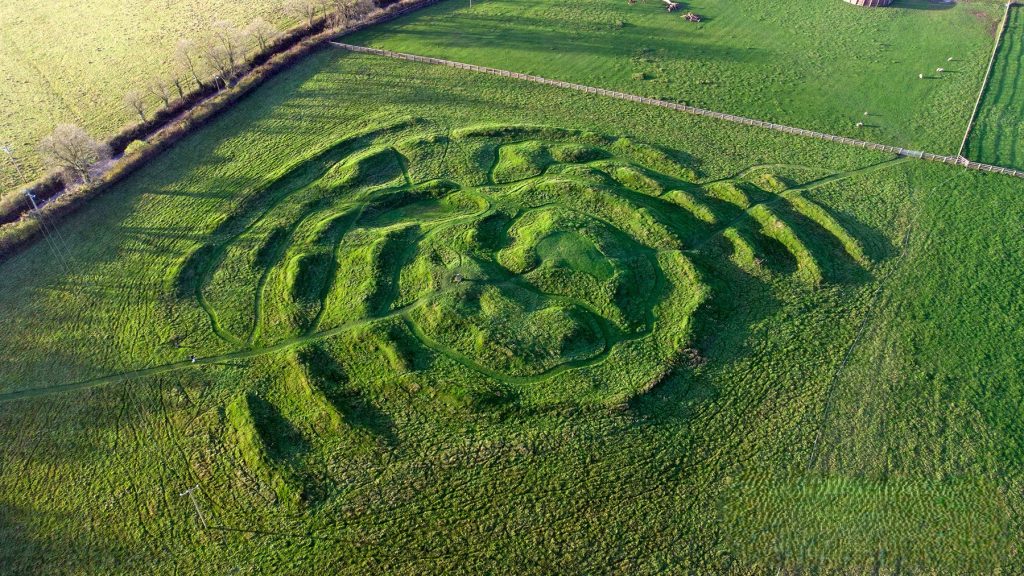
Nowhere is the spirit of Samhain more deeply rooted than in Ireland, where myth and landscape intertwine. Near Athboy in County Meath lies Tlachtga (Hill of Ward), once the ceremonial heart of Samhain. Archaeologists believe vast gatherings took place here over 2,000 years ago, where druids lit sacred fires to mark the death of summer and the birth of winter.
According to legend, the site is named after Tlachtga, a powerful druidess who gave her life to magic and whose spirit was said to emerge each Samhain. From her hill, the Great Fire of Tara was visible, a beacon igniting smaller fires across the land, linking clans and kingdoms in a single ritual of renewal.
Today, local communities in Meath have revived this Fire Festival, blending ancient ritual with music, storytelling, and procession. Families carry torches, musicians play bodhráns (drums) under the stars, and the old chants rise again on the autumn wind. Standing there, it’s easy to feel the old pulse of time , the same that once guided Celtic kings and druids.
Scotland: Where the Spirit Still Burns Bright
Across the sea, the highlands and coasts of Scotland keep their own flame alive. The small village of Auldearn, near Inverness, captures Samhain’s warmth and mystery in a way that feels both ancient and intimate.
Each October 31st, as twilight spreads over the moors, villagers gather for the Auldearn Samhain Gathering. They carve tumshies (turnip lanterns), light bonfires, and walk together to the Rose Garden Green to share songs and ghost stories.
Local artist and organiser Helen Wright explains: “Most people don’t realise Auldearn’s deep history with witchcraft and the old festivals. Our Samhain Gathering lets us honour those stories and celebrate the turning of the year. It’s about remembering the past, connecting with nature, and being together as the light fades.”
It’s a night of lantern glow and laughter, of soups and bannocks, cider and tales. In the flicker of the fire, Auldearn feels suspended between centuries, the same community spirit that once fueled Samhain still alive in every smile and spark.
Edinburgh: A City Built on Shadows
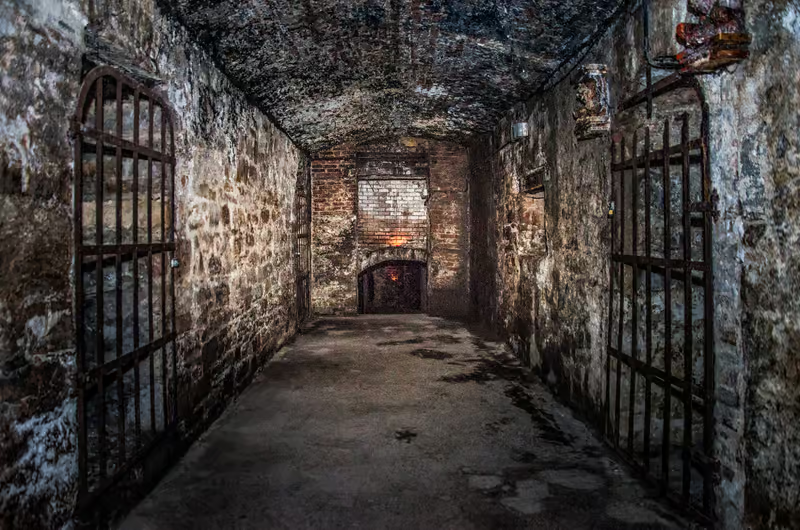

If Auldearn whispers, Edinburgh seems to hum with memory. Its narrow lanes, arched bridges, and misty closes feel like a city layered with centuries — every stone breathing old stories.
“Edinburgh is a city built on layers of history,” says Carlos Paz, a local ghost-tour guide. “Beneath your feet lie tunnels where people once lived and suffered. You don’t need to believe in ghosts to feel it.”
He’s speaking of the South Bridge Vaults, a warren of chambers built in the 1780s beneath the Royal Mile. At first, they were simply storage spaces, but over time, they became home to the city’s poorest—criminals, workers, and families trapped in the dark. As the years passed, disease and despair soaked into the walls, giving rise to tales of hauntings that still draw visitors by candlelight.
Carlos smiles when asked if he’s ever seen anything himself. “Once, our only candle went out. No wind, no sound. A guest said she felt a cold hand on her arm. In that moment, you realise ghost stories aren’t really about ghosts; they’re about people. About how we remember them.”
Today, every October, Edinburgh becomes a stage for fire festivals, street parades, and ghost tours, all echoing the Celtic idea that death and life are intertwined—not as horror, but as harmony.
How to Experience the Celtic Spirit of Halloween
If you want to feel the pulse of Halloween’s true origins, journey through the Celtic lands where it all began:
- Join the Tlachtga Fire Festival (County Meath, Ireland): where ancient rites are reimagined through music, dance, and flame.
- Attend the Samhuinn Fire Festival (Edinburgh): a dramatic re-telling of the battle between Summer and Winter by the Beltane Fire Society.
- Visit Auldearn’s Samhain Gathering: a community festival of lanterns, folklore, and remembrance.
- Explore Edinburgh’s Vaults and Greyfriars Kirkyard: guided tours that blend legend and local history. Join the tour here.
- Try old Celtic traditions: carve a turnip lantern, light a small fire, or share a meal in memory of those who came before.
Remember: Samhain was never about fear. It was about balance; acknowledging loss while celebrating continuity, giving thanks for harvest and hope alike.
The Fire Still Burns
From the sacred hill of Tlachtga to the shadowed vaults of Edinburgh, the spirit of Samhain still flickers in the Celtic world. Though the centuries have wrapped it in new symbols; pumpkins, costumes, and candy, its essence remains unchanged. A night to honour the dead, embrace the dark, and welcome the light’s return.
Stand by a fire on a late October night in Ireland or Scotland, and you might still feel it, that ancient heartbeat beneath the earth, steady and soft, reminding you that every ending is also a beginning.
Because the veil may be thin, but so is the distance between past and present.

Deti Lucara
Writer | FounderA writer and traveler from Indonesia, and the founder of thecharmingworld.com — a space born from my love for art, culture, and human connection. I created it for kindred souls who believe that beauty lives in curiosity, wonder, and the stories we share along the way.