
A Journey Beyond Grief: Finding Life in the Marigold Maze of Mexico’s Day of the Dead
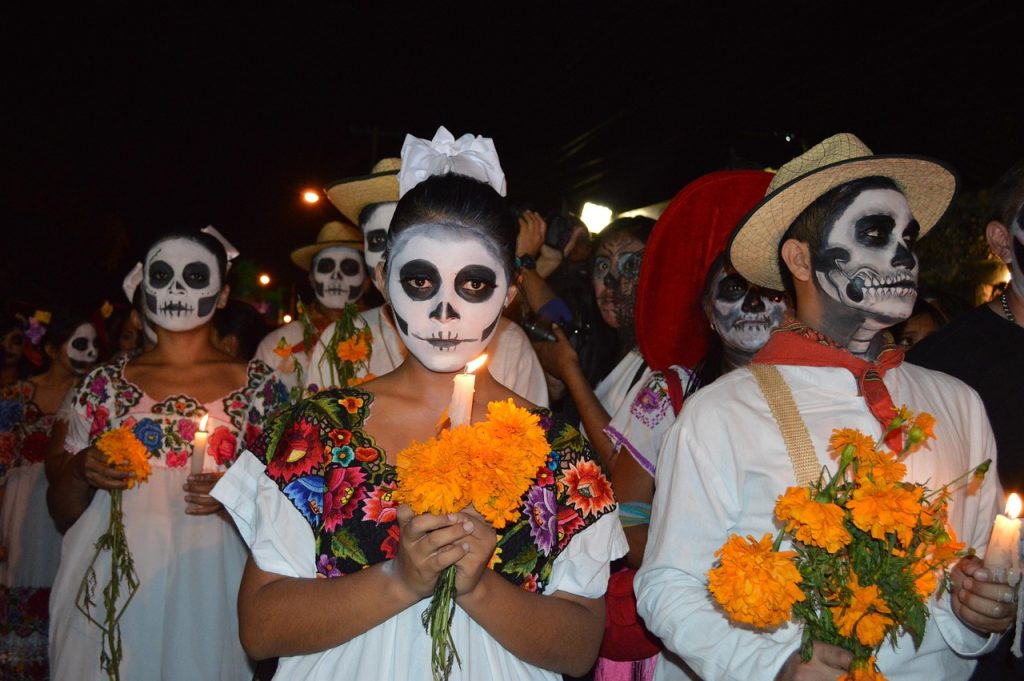
More than just Mexico’s most colorful festival, Día de Muertos — the Day of the Dead — is a spiritual homecoming that celebrates love, memory, and the eternal bond between the living and the departed. When I reached out to Natalia Cabarga, an art historian and founder of Walk Mexico Tour, to learn about the true meaning behind the holiday, our conversation turned into a three-hour online journey through Mexico’s vibrant history. Through her stories, photos, and passion, I discovered that the Day of the Dead isn’t about mourning — it’s about honoring life, culture, and the joy of remembrance.
A Conversation That Opened a Door to Mexico’s Soul: Mexico’s Ancient View of Mortality
When I first reached out to Natalia Cabarga, an art historian and certified Federal Tourist Guide in Mexico, I only wanted to ask a few questions about her Walk Mexico Tour. But Natalia’s response surprised me — she was genuinely thrilled and immediately offered to give me an online session about the history and meaning of Día de Muertos, or the Day of the Dead.
That “quick chat” turned into a three-hour deep dive into the heart of Mexico’s most meaningful tradition. Natalia’s warmth, her radiant passion, and her generosity shone through every story she shared. She showed me photos and videos, explained the symbolism of the marigolds, and spoke about the indigenous beliefs that still pulse beneath the celebration today. Her energy made me feel as if I were right there — walking through the candlelit cemeteries, breathing the sweet scent of copal incense, and witnessing the joy of families welcoming their loved ones home.
That conversation became my window into Mexico’s soul — a journey beyond grief and into the celebration of memory, love, and continuity.
The Cycle of Life: Where Death Is Not the End
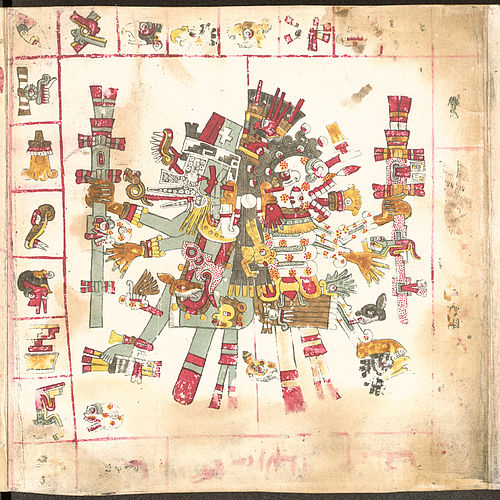
Through Natalia’s stories, I learned that to understand Día de Muertos, one must see beyond its colorful altars and skeleton costumes. It is rooted in pre-Hispanic philosophies — among the Aztecs, Toltecs, and Maya — where death was seen not as a finality but as part of a continuous cycle of regeneration.
For the Mexica (Aztecs), death nourished life. Their rituals, even those involving sacrifice, symbolized a cosmic reciprocity — the belief that life persisted only because death gave back to the universe. The soul’s journey after death wasn’t determined by morality but by how one lived and died. Warriors who fell in battle became the rising sun; others embarked on a peaceful voyage to Mictlán, the underworld of rest.
As Natalia described it, “Our ancestors didn’t fear death. They understood it as a transformation — a return to the great balance.”
When Spanish missionaries arrived in the 16th century, they found it impossible to erase such a deep-rooted worldview. Instead, they adapted it, merging it with All Saints’ Day and All Souls’ Day, giving birth to the hybrid celebration we now know as Día de Muertos — a remarkable blend of indigenous and Catholic spirituality.
A Festival of Reunion
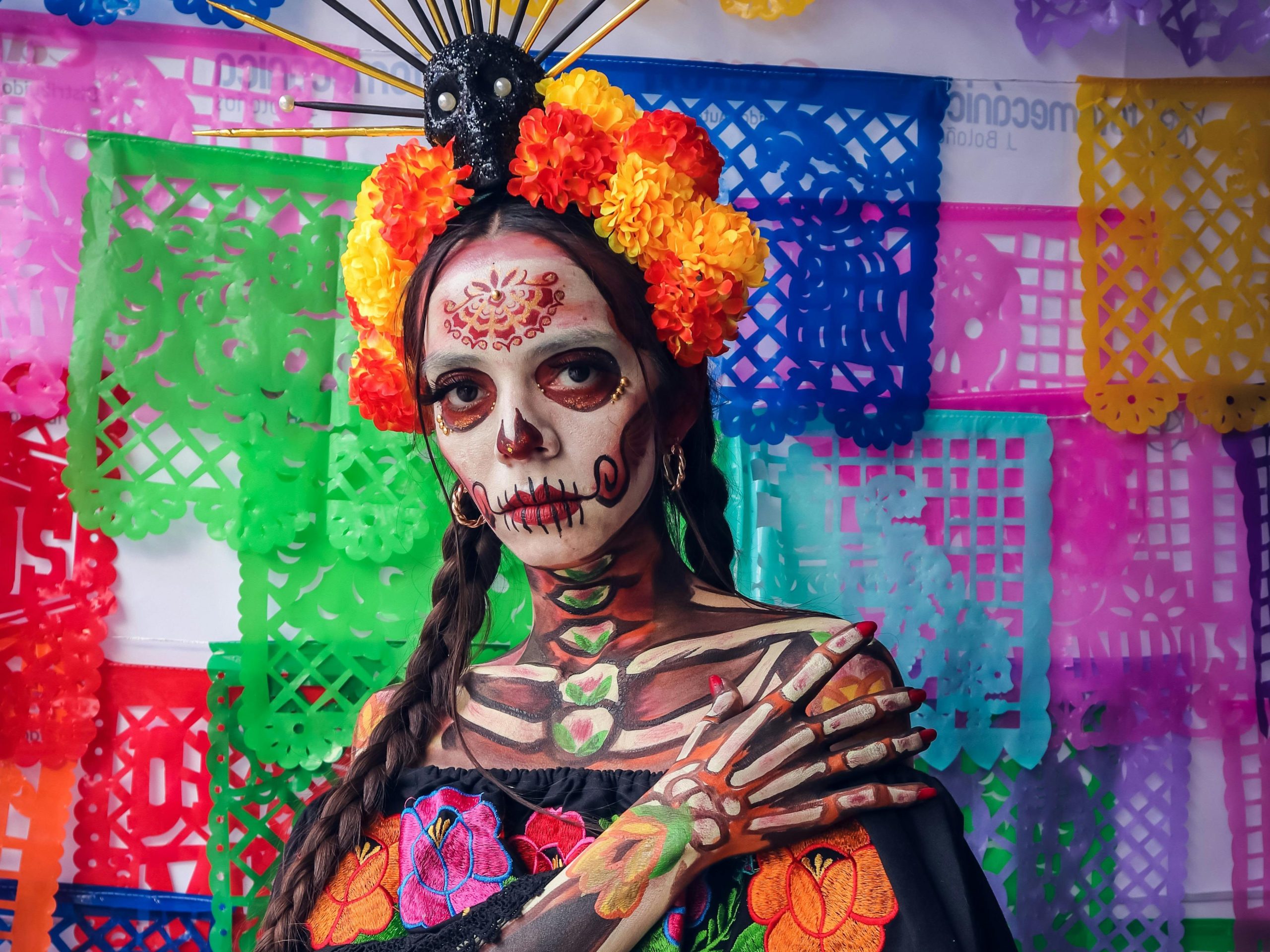
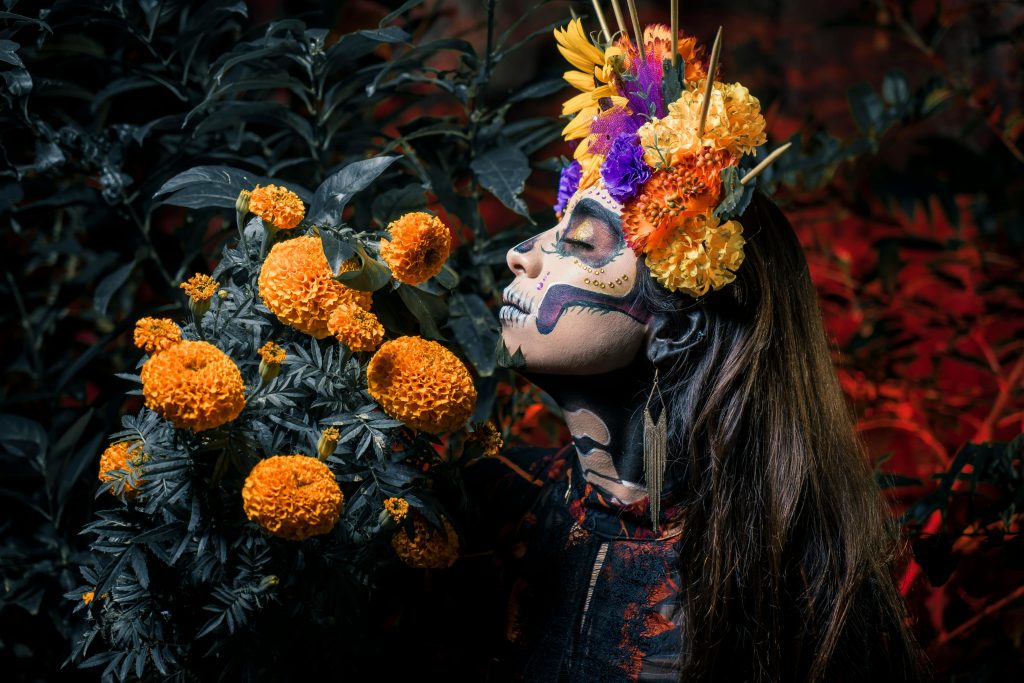
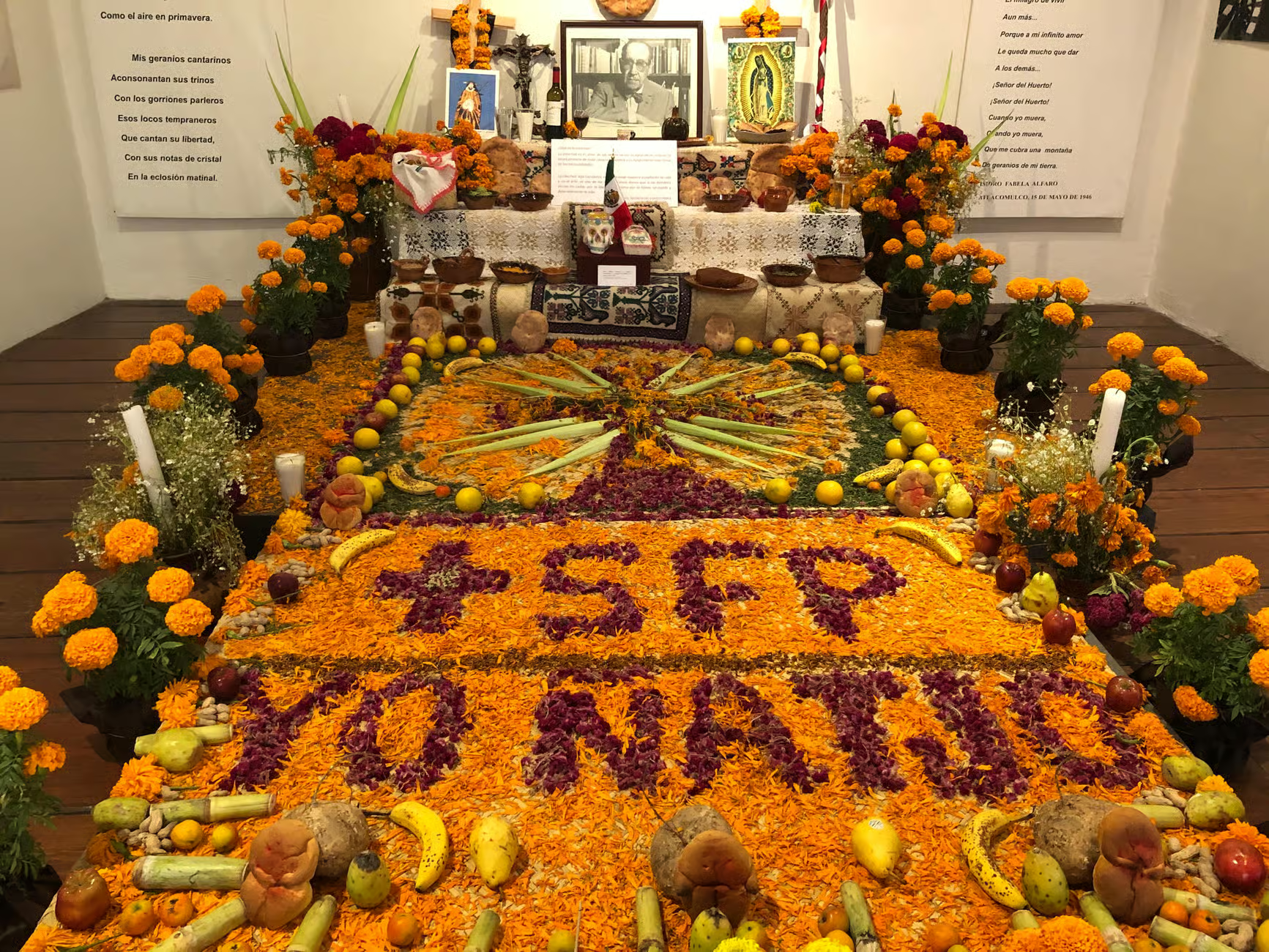
Every November 1st and 2nd, Mexico comes alive in colors that defy mourning. Natalia’s photos showed me how entire streets and cemeteries glow with the gold of cempasúchil, the marigold known as the “Flower of the Dead.”
These flowers form pathways believed to guide spirits home — their bright petals and strong scent leading loved ones back to their families. At the center of it all are the ofrendas — multi-tiered altars covered with candles, food, and personal mementos. Each item has meaning: water for the soul’s thirst, salt for purification, pan de muerto (sweet bread) for the cycle of life, and a photo of the departed, so they are never forgotten.
“Every ofrenda,” Natalia told me, “is a conversation between worlds — a reunion of the living and the dead.”
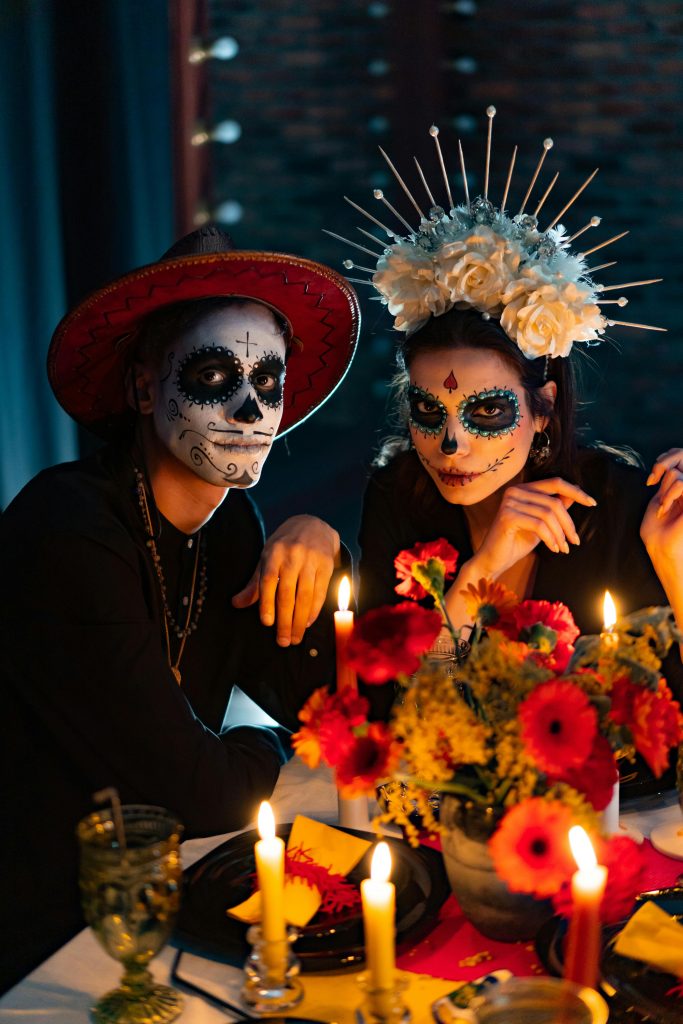
In cities like Oaxaca and Mexico City, this reunion turns into a grand celebration. Streets overflow with La Catrina figures — elegant skeletal ladies symbolizing equality in death — while music and dance fill the night air. Yet beneath the spectacle, there remains a profound respect for ancestry and memory.
From Tradition to Transformation: Natalia’s Perspective
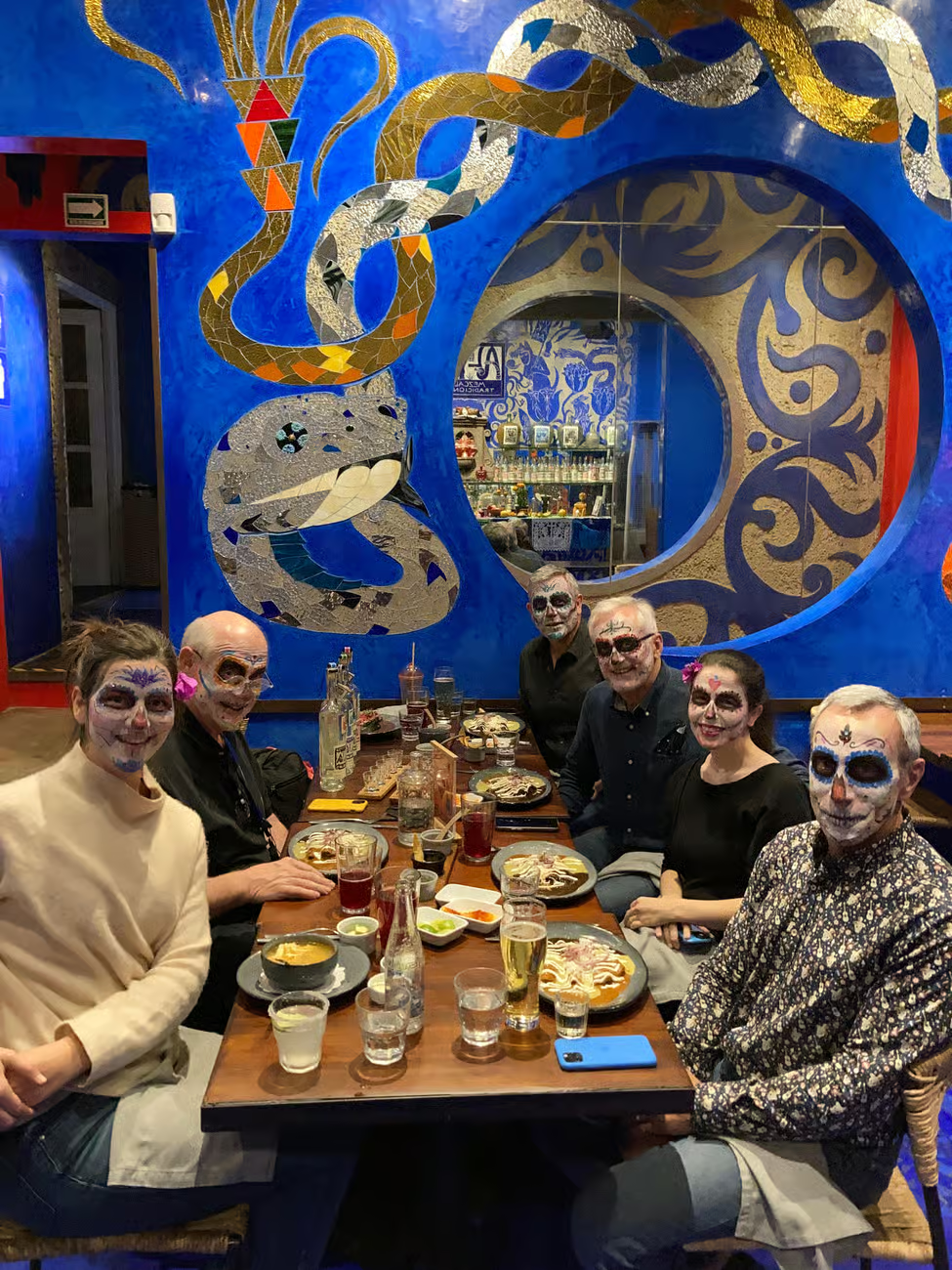
| Photo by: Natalia C

Natalia admitted during our conversation that she once struggled with the commercialization of this sacred celebration. “When movies and government campaigns started turning our traditions into a spectacle, I felt sad,” she confessed. “It seemed like the soul of Día de Muertos was being sold.”
But leading her tours changed her view. She witnessed small-town families saving all year to participate in parades, creating elaborate costumes not for show, but from pride. “I realized,” she said, “that this wasn’t cultural loss — it was cultural renewal. People wanted to share what they loved most about being Mexican.”
One of her most moving experiences came when she invited travelers to place a photo of their own departed loved one on a local ofrenda. “Some people cried,” she told me softly. “It wasn’t just about watching — they felt it. That night, they understood what we mean when we say the veil between worlds becomes thin.”
Listening to her describe these moments, I could feel the tenderness in her voice — that mix of reverence and gratitude that made me understand why Día de Muertos is not about death at all. It’s about continuity, healing, and the joy of remembrance.
A Moment of Healing Beyond Tourism
Natalia’s most treasured memory, however, came during a small, quiet ritual she introduced into her tours. After laying the groundwork, she took her travelers to a neighborhood ofrenda and offered them a simple yet profound opportunity. “I asked each participant if they wanted to place a picture of their own loved one who had passed away onto the altar,” she explained. “It was a tiny gesture, a moment of connection that transcended language or culture.”
Almost immediately, the response was overwhelming. She described the change on people’s faces; the momentary break in the tourist façade as they gently placed a grandmother’s photo or a cherished friend’s picture next to a glass of water and a bright marigold. In that moment, they felt seen, their grief honored in a way they never had before,” Natalia said. “Some people cried. It wasn’t just a tour moment; it was a beautiful, healing moment. In the end, they understood that on this night, the veil was thin, and they were, in a way, communing with the person they missed.”
Experience the heart of Mexico’s Day of the Dead with Natalia; an immersive, thoughtful tour you can book here.
Your Journey of Transformation
The Día de Muertos is more than a holiday. It’s a spiritual experience that reshapes your relationship with loss, showing that a soul remembered is never truly gone. It transforms fear into acceptance, joy, and connection.
To feel the tradition’s true healing power, an immersive tour is essential. With an expert like Natalia Cabarga, you move beyond the tourist crowds and into the heart of authentic rituals, guided with knowledge and sensitivity.
You return home not just with souvenirs, but with a lighter view of mortality and a deeper appreciation for the bonds that endure, seeing death not as an ending, but as a reason to celebrate life.
Tips for a Respectful Experience
To ensure your visit honors the spirit of the holiday, follow these guidelines:
- Respect the Cemeteries: Cemeteries (like those in Pátzcuaro or Mixquic) are sacred family spaces. Ask before taking photos, speak softly, and avoid disturbing family vigils.
- Ofrendas are Private Invitations: Altars in private homes are intimate. Only approach or photograph a public ofrenda in a museum or plaza.
- The Catrina Look: If you choose to wear skull makeup, understand that it is a complex cultural symbol, not a simple costume. Use it as a respectful tribute to La Catrina and the indigenous philosophy of death.
- Book an Immersive Tour: For a truly enriching experience, book a tour with a local expert like Natalia Cabarga’s Walk Mexico Tour. Their in-depth knowledge and respectful approach are invaluable for a “one-in-a-lifetime experience.”
Ready to embrace the beauty of remembrance and transform your view of mortality?
Affiliate disclaimer: Some of the links on this website are affiliate links. This means that if you click on them and make a purchase, we may earn a small commission—at no extra cost to you. These commissions help support the work we do in creating thoughtful travel stories and guides. We only recommend products, services, and experiences that we believe bring genuine value to travelers.

Deti Lucara
Writer | FounderA writer and traveler from Indonesia, and the founder of thecharmingworld.com, a community-driven magazine inspired by my love for art, culture, and human connection. I created this space for kindred souls who believe that true beauty is found in wonder, curiosity, and the stories we share along the way.
This really stayed with me. I love how Day of the Dead isn’t shown as something “exotic”, but as something deeply human. remembering, missing, and still making space for those who are gone. Beautifully written, and quietly powerful.