Following Vincent van Gogh’s Footsteps Across Europe
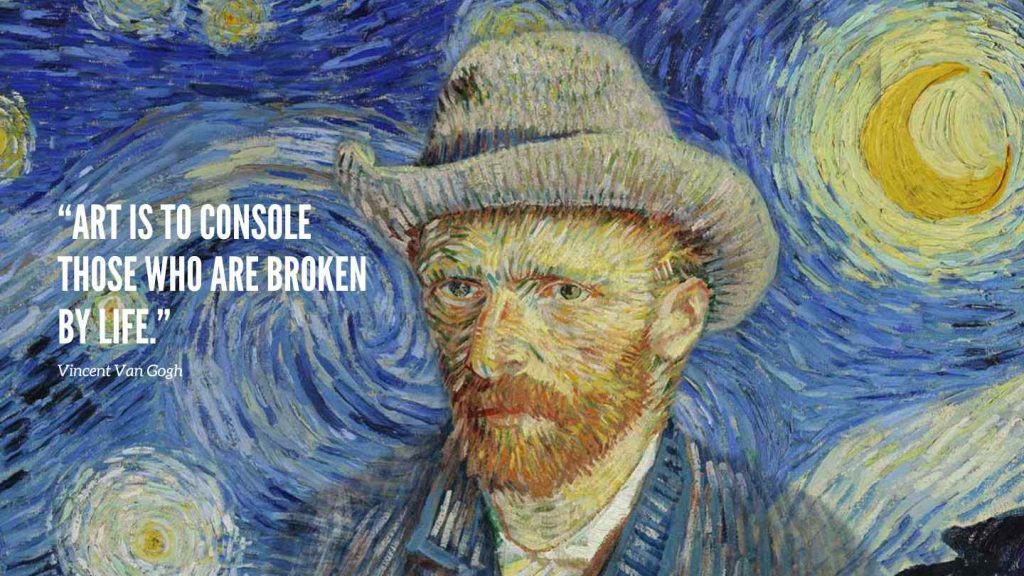
Vincent Van Gogh, the restless artist, left behind a trail that traces the map of a wandering heart. He lived at a higher frequency than the world around him—a seeker whose internal intensity often collided with the external landscape. He didn’t just paint what he saw; he captured the emotional weight of being alive.
As we reach March, we enter the month of Vincent’s birth, a time that feels particularly poignant today. Celebrating his legacy in our current world is an act of resilience. It reminds us that even amidst uncertainty, there is a universal language of wonder, challenge, and human connection to be found in a sun-drenched field or a quiet cafe. This is the story of a man who moved not just for the shifting light, but for a sense of belonging that always sat just past the horizon.
The Dark Soil of the Beginning: Nuenen
Searching for a Purpose
Our journey begins in the damp, grey lowlands of the Netherlands. Before the sunflowers, there was the soot. Vincent van Gogh was born into a deeply religious, middle-class family—his father, Theodorus van Gogh, was a Protestant minister, and his mother, Anna Cornelia Carbentus, had a quiet love for drawing and nature. Art was not yet his path, but sensitivity—to people, to suffering, to the natural world—was already embedded in him.
Before turning to painting, Vincent drifted through several callings. He worked as an art dealer, first in The Hague and later in London and Paris, but struggled with the commercial side of the art world. He then attempted to follow in his father’s footsteps, becoming a missionary in the coal-mining region of Belgium. There, his empathy became almost self-destructive—he gave away his possessions, lived among the miners in near poverty, and was ultimately dismissed by the church for taking his devotion too far. It was in the aftermath of this failure, at the age of 27, that he turned to art—not as a career, but as a necessity, a new language to express what words and religion had failed to hold.
In the village of Nuenen, Vincent lived in his parents’ laundry room, obsessively studying the lives of what he called the “people of the soil.” His psychology here was one of heavy empathy. He felt the back-breaking labor of weavers and miners in his own bones. He did not want to paint the refined or the comfortable; he wanted to honor the calloused hands, the worn faces, and the dim, flickering interiors of those who lived close to the earth.
The Potato Eaters (1885)
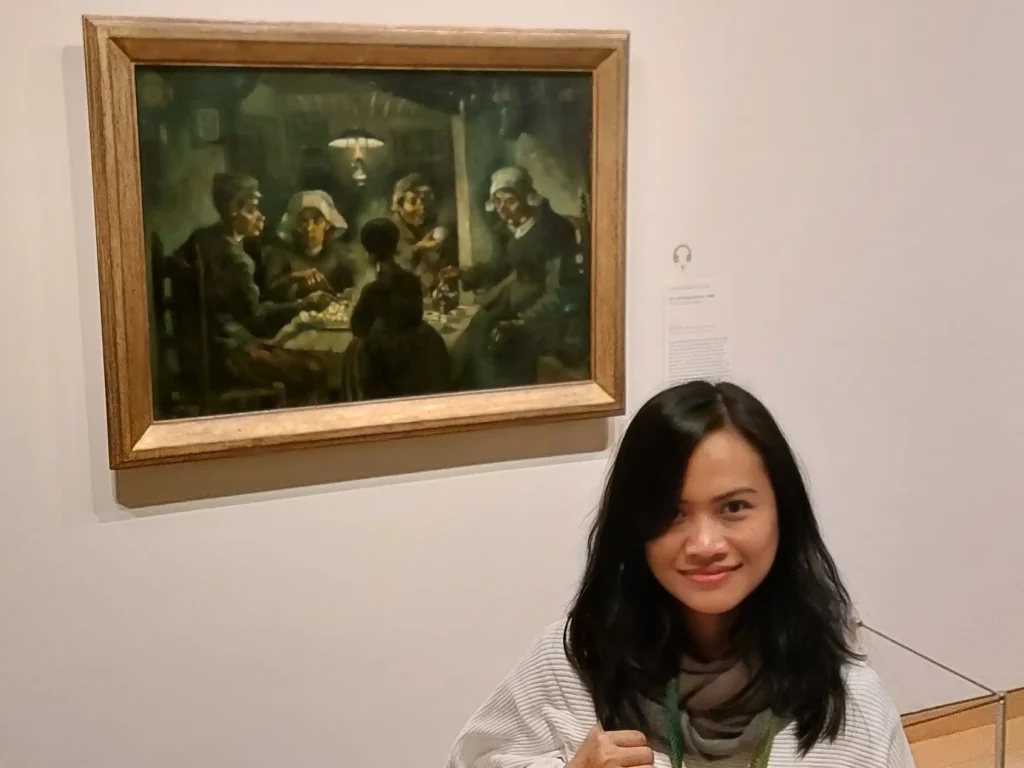
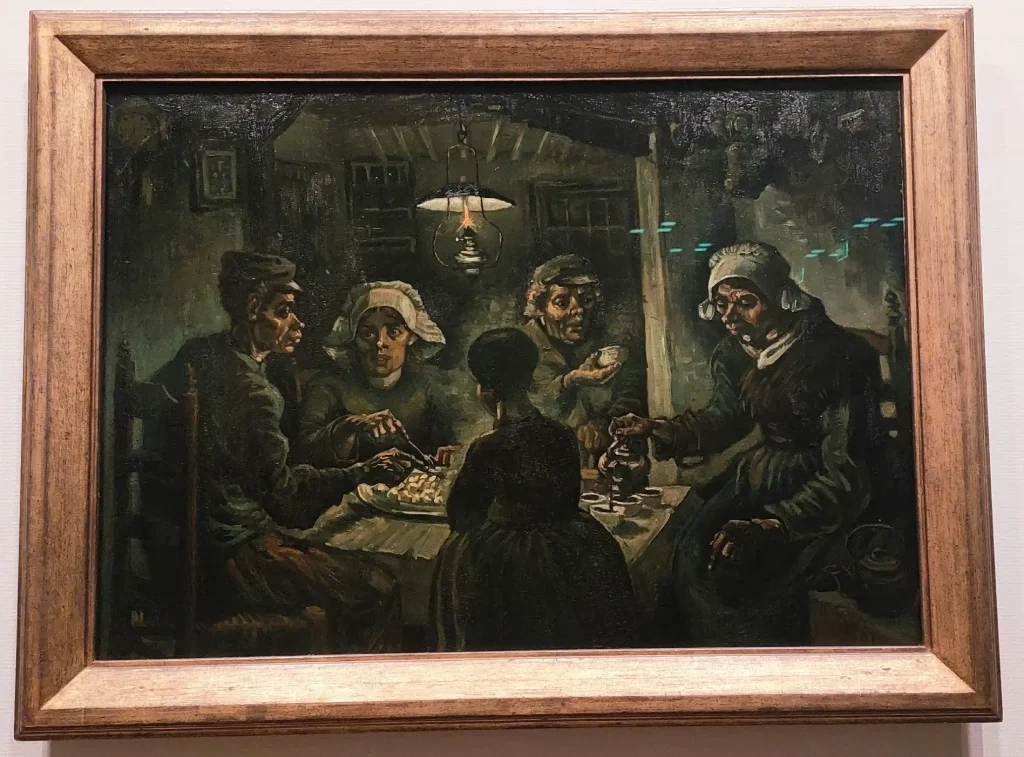
This is a painting you can almost smell. Dark, earthy, and cramped, Vincent used colors the shade of an unpeeled potato to evoke the rawness of peasant life. Five figures gather around a simple meal, their hands rough, their faces carved by labor. For Vincent, this was not misery—it was dignity. He believed these people had “earned their food honestly,” and he painted them with a kind of reverence. The work captures a moment of quiet, weary communion—a life lived in the shadows of the Industrial Revolution, yet grounded in something deeply human. It was, in his eyes, his first true masterpiece.
The Search for the “High Yellow” Note: Arles
The Longing for Brotherhood
By 1888, Vincent van Gogh had fled the grey, heavy skies of Paris. Exhausted by the city’s cynicism, he moved south to Arles in search of something more luminous—both in light and in spirit. He dreamed of creating an “Atelier of the South,” a quiet brotherhood of artists who would live simply, almost monastically, devoted entirely to their work. In Arles, he found the intense, golden light he had long been chasing—a “high yellow” note he believed could soothe the soul—and his palette seemed to burst open with new energy.
At the heart of this dream stood the Yellow House at Place Lamartine. It was more than just a home; it was meant to be the foundation of his imagined community. There, Vincent worked with feverish intensity, painting not only what he saw, but what he hoped for.
The Yellow House (1888)
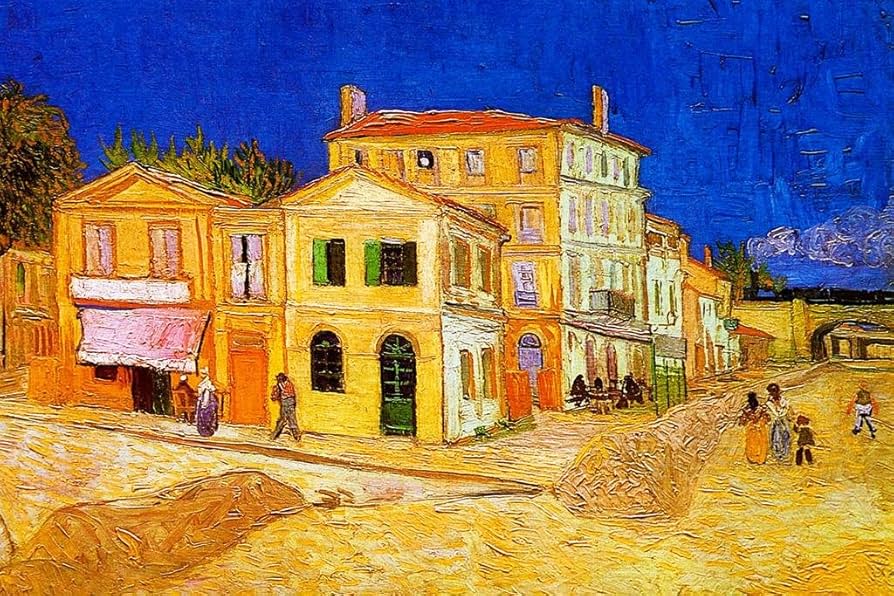
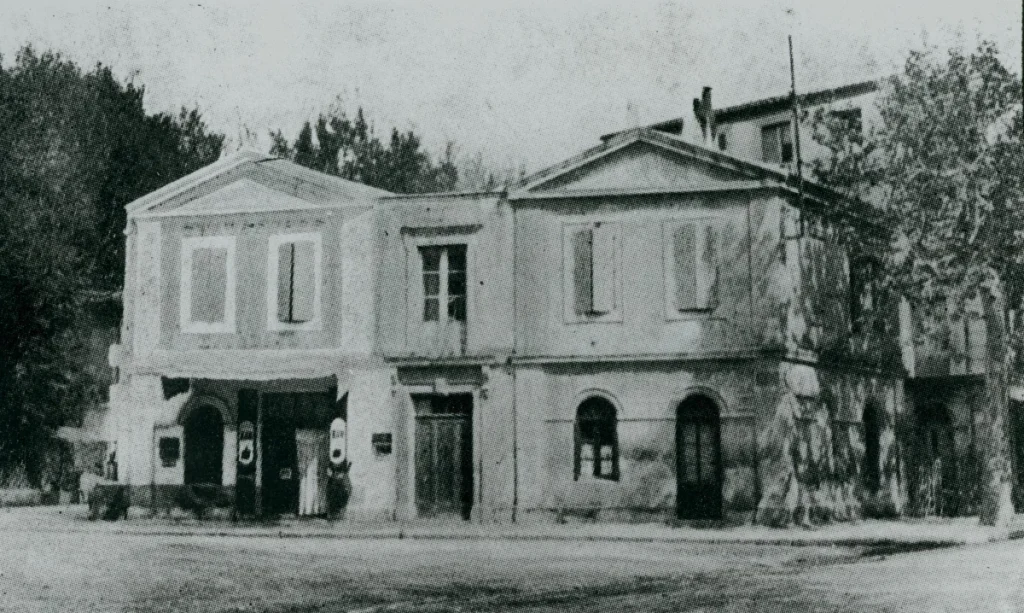
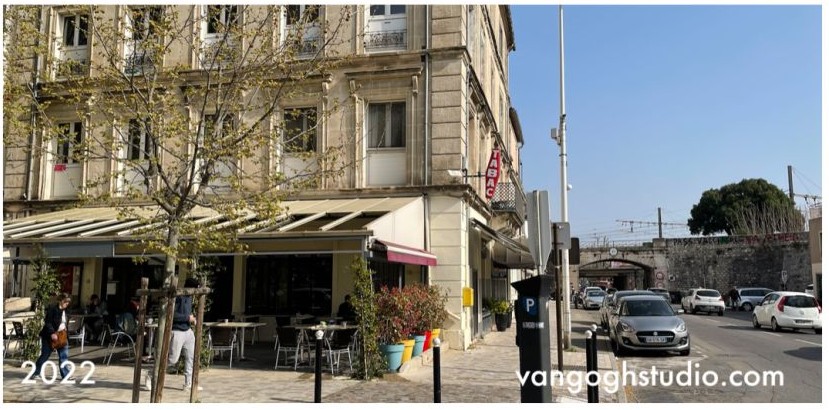
In La Maison jaune, the house appears bright and steadfast beneath a clear blue sky. It is more than architecture—it is Vincent’s vision made visible. A home, a studio, a place of belonging. The painting carries a quiet optimism, a belief that stability and companionship were finally within reach.
He prepared a room for Paul Gauguin, decorating it with his Sunflower series—gestures of warmth, almost devotional in their intensity. But Arles was not only a place of hope; it was also where Vincent began to confront the deeper unrest within himself.
The Night Café (1888)
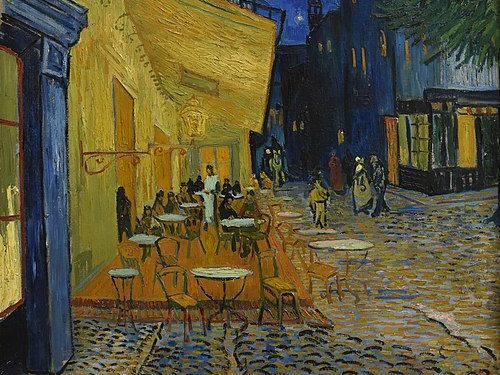
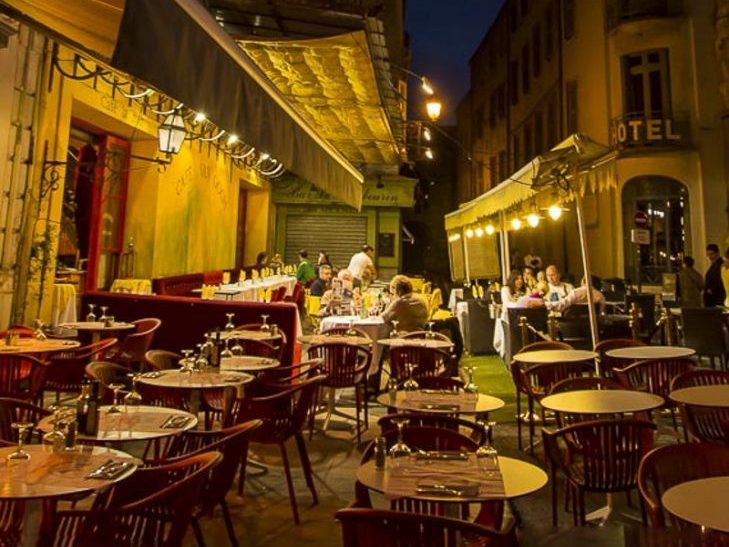
In Le Café la nuit, Vincent painted the interior of a local café he often visited. But rather than comfort, the space feels unsettling. The clashing reds and greens, the skewed perspective, the harsh gaslight—everything vibrates with unease. He once described it as a place where one could “ruin oneself,” and the painting becomes less about the café itself and more about the psychological weight of loneliness and sleepless nights.
As tensions with Gauguin grew, Vincent’s inner world became increasingly fragile. Their personalities clashed, and the fragile harmony he had hoped for began to dissolve.
The partnership collapsed, culminating in the infamous night of December 23, when Vincent severed part of his own left ear—a moment that has come to symbolize the unbearable pressure he carried within. He was taken to the hospital in Arles, where his world briefly narrowed to recovery and reflection.
The Garden of the Hospital (1889)
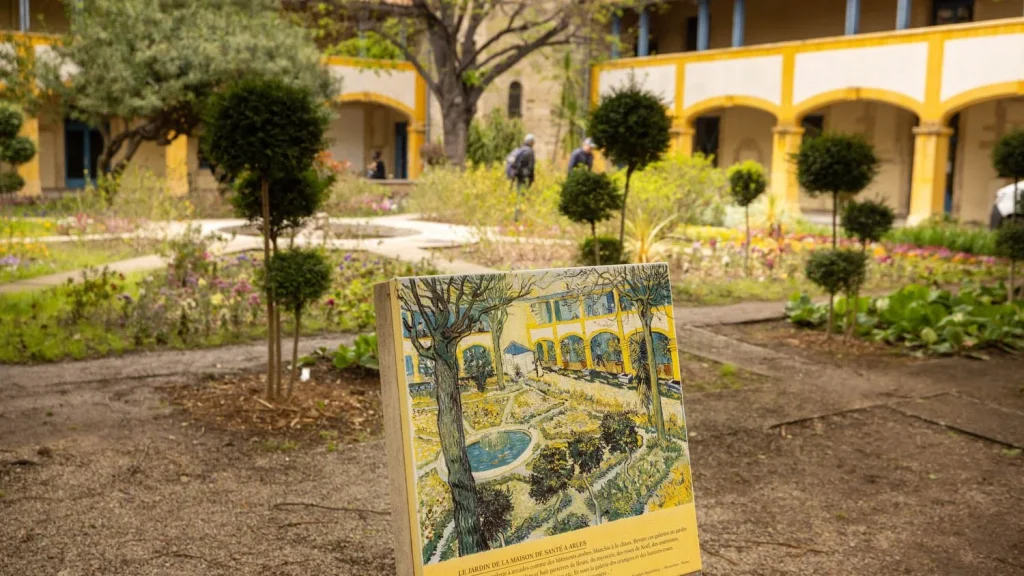
In Le Jardin de l’Hôtel-Dieu, painted during his stay at the hospital, the scene shifts. The garden is enclosed, structured, almost calm. The chaos of the café gives way to something more contained. Yet even here, the brushstrokes remain alive, searching. It is not peace, but a fragile attempt at it—a moment of stillness after rupture.
When Vincent returned to the Yellow House, the world around him felt altered. Even his painting The Bedroom had suffered damage after flooding from the nearby Rhône River, as if the physical space itself mirrored the quiet disintegration of his dream.
Today, the Yellow House no longer exists as it once did—destroyed during the Second World War. Yet the site still invites reflection. Sitting there now—perhaps with a simple noisette or a glass of pastis—you can almost sense the echoes of Vincent’s ambition, his brilliance, and the fragile vision of brotherhood that once filled those sunlit rooms.
The Struggle: Finding Order in the Chaos
Broken by his breakdown, Vincent van Gogh checked himself into the asylum of Saint-Paul-de-Mausole in Saint-Rémy-de-Provence. This was perhaps his most profound period of psychological struggle. Confined to a small cell with a view of a walled wheat field, he began to see the world not as static objects, but as vibrating energy.
Yet, in one of art history’s most striking ironies, this period of confinement and fragility became one of his most fertile. Painting was no longer just observation—it was survival. In letters to his brother Theo van Gogh, Vincent described working with urgency and discipline, as if each canvas could steady his unraveling mind. Despite episodes of illness, he produced an astonishing number of works—fields, olive groves, irises, cypresses—each pulsing with intensity. What he could not control within himself, he transformed into rhythm, color, and movement.
His brushstrokes became eddies and whirlpools. He was no longer painting the landscape; he was painting the “human landscape”—the way the wind feels when you are grieving, the way a cypress tree stretches upward like a silent prayer. The world bent and swirled under his gaze, not because it changed, but because he felt it differently.
The Starry Night (1889)
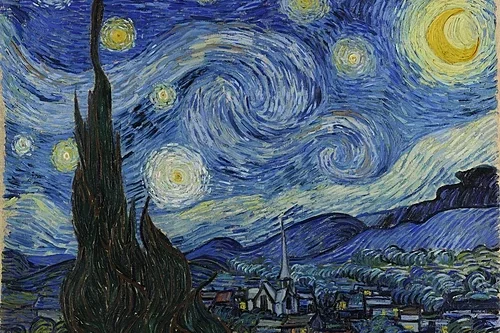
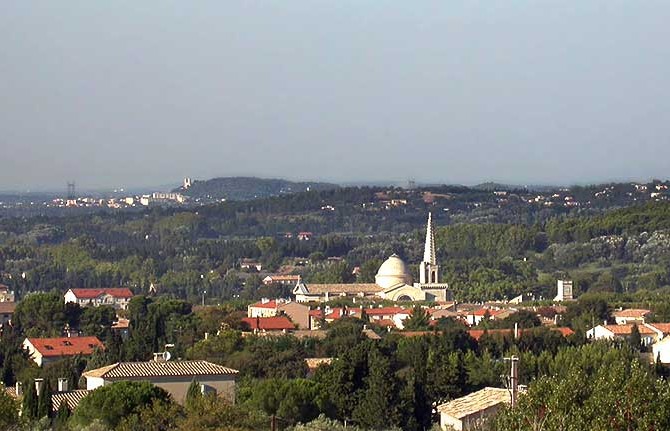
This is the view from his asylum window, reimagined through memory and emotion. The sky becomes a roiling ocean of cosmic energy, alive with motion, while the village below rests in quiet, almost indifferent stillness. A dark cypress rises like a flame, bridging earth and sky, mortality and the infinite. It is not just a night scene—it is a meditation on longing, on isolation, on the fragile hope of connection beyond oneself.
The Asylum Years: When the Mind Breaks, the Canvas Speaks
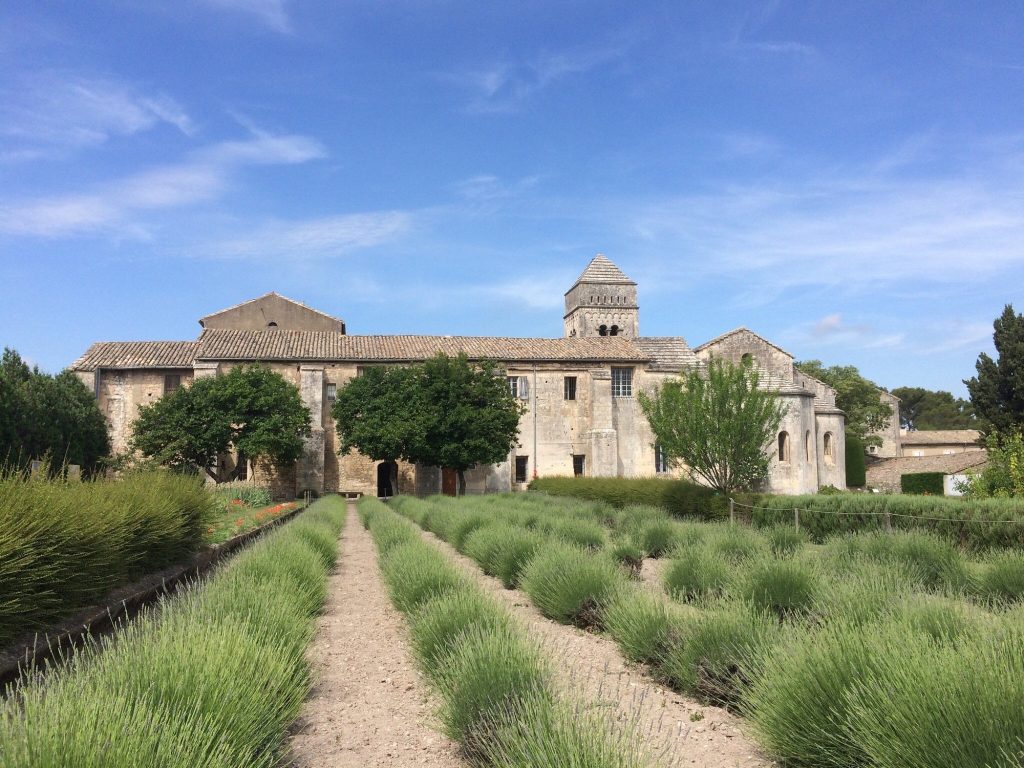
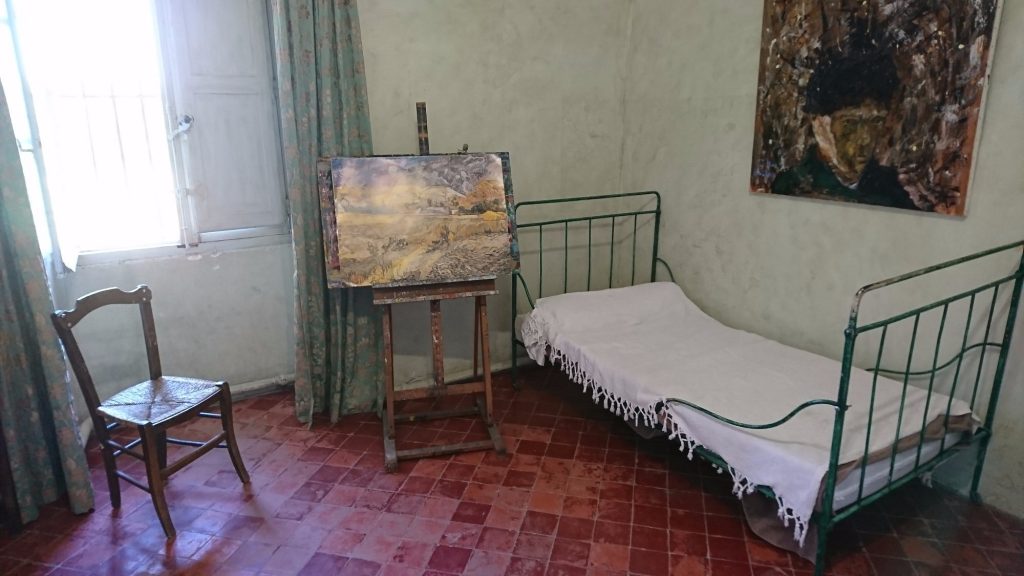
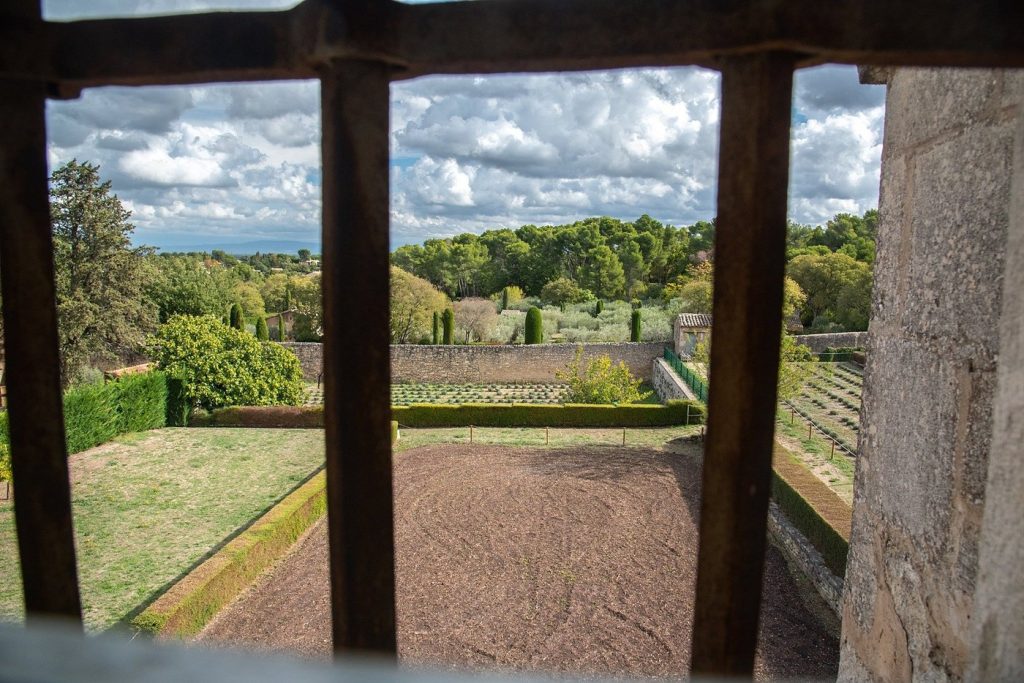
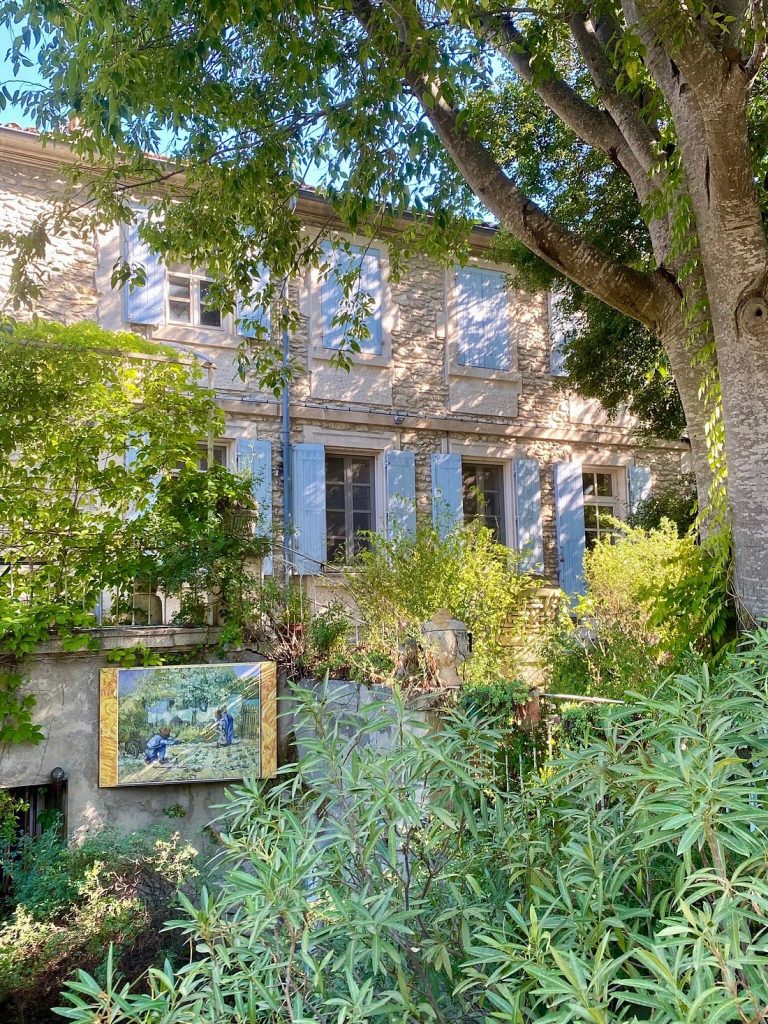
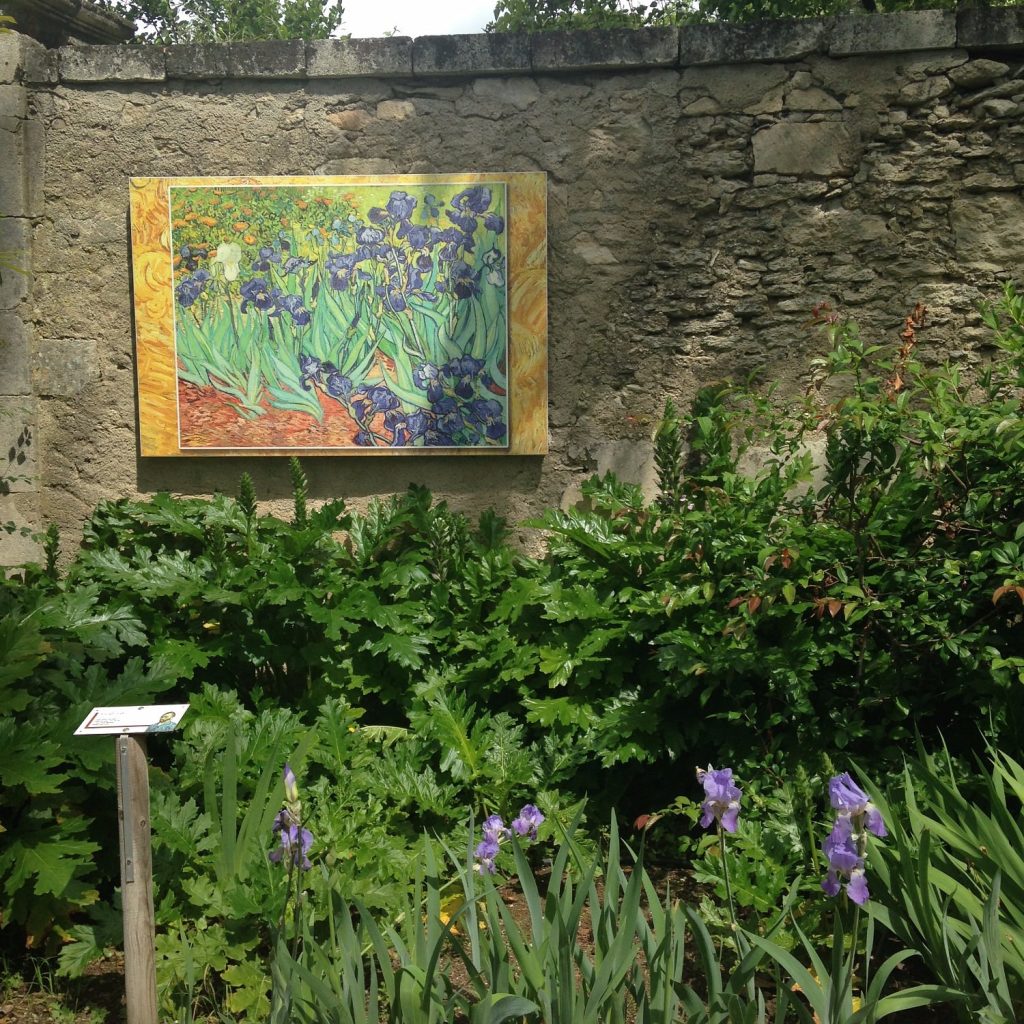
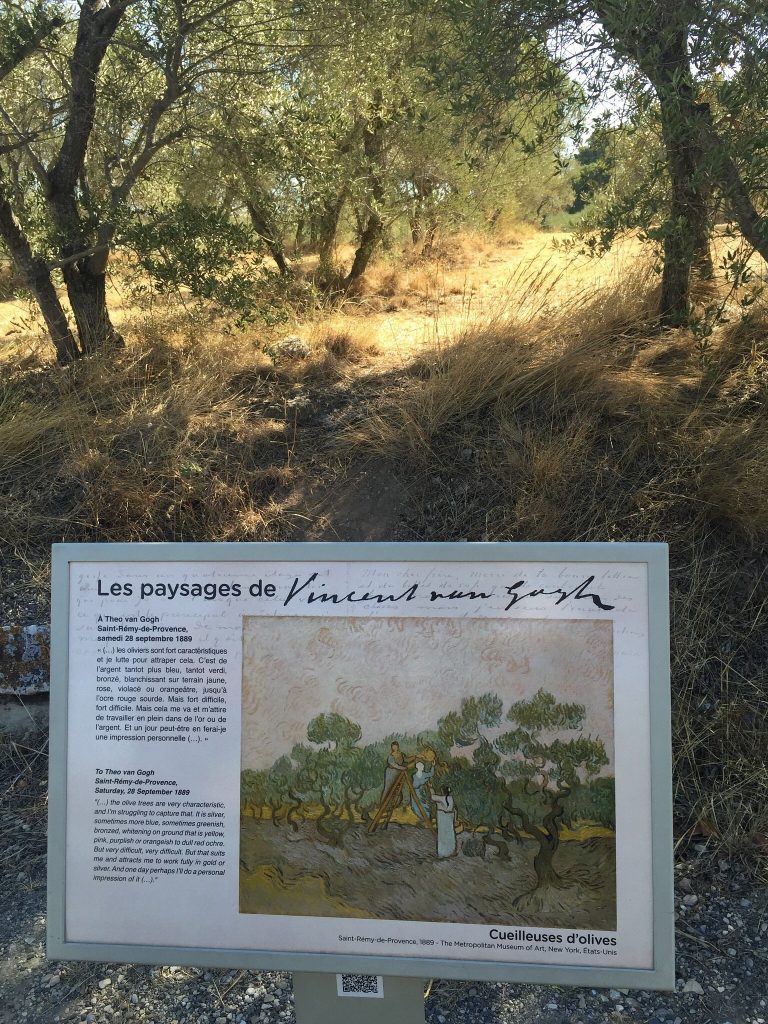
To visit Saint-Paul-de-Mausole today is to step quietly into this inner world. The experience is almost essential to understanding Vincent—not just as an artist, but as a human being. The long, hushed corridors, the restrained gardens, the view stretching beyond the stone walls, and his small, solitary bedroom all carry a presence that feels both heavy and strangely serene. There is a haunting beauty in the stillness. Throughout the site, replicas of his paintings are placed exactly where they were created, allowing you to stand in the same spots, to see what he saw—yet also to sense how deeply he transformed it.
And perhaps this is why his work endures so deeply today. These paintings were not created in peace, but in tension—between despair and beauty, chaos and control. Vincent did not paint despite his struggles, but through them. What emerged were not just images, but emotional landscapes that continue to resonate across time—reminding us that even in confinement, even in darkness, something luminous can still take shape.
The Golden Sunset: Auvers-sur-Oise
The Weight of the End
The final stop on our journey is the quiet, verdant village of Auvers-sur-Oise, just north of Paris. Vincent van Gogh arrived here in 1890, seeking both closeness to his brother Theo van Gogh and the gentle supervision of Paul Gachet. There was, at first, a fragile sense of hope—Auvers was open, green, and calm, a stark contrast to the confinement of the asylum.
And yet, even in this pastoral setting, something within him remained unsettled. Vincent threw himself into work with astonishing intensity, producing nearly a painting a day. It was as if he understood, on some unspoken level, that time was slipping. His canvases from Auvers feel urgent—fields bending under vast skies, cottages tilting under invisible weight, roots twisting through the earth like thoughts that refuse to quiet. In his letters, he wrote of an “extreme loneliness,” a feeling that seemed to expand despite the beauty around him.
The rolling hills and thatched roofs of Auvers provided a soft, almost tender backdrop for his final weeks. But beneath that gentleness, there is a quiet tension in his work—as though the landscape itself is holding its breath. Vincent had given everything to his art—his stability, his relationships, his sense of self—and in the end, the world he felt so deeply may have become too heavy to carry.
Wheatfield with Crows (1890)
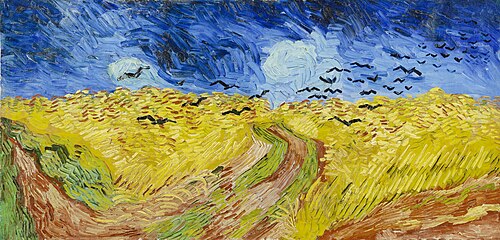
Often seen as one of his final paintings, this work feels like a threshold. The paths cut abruptly through the golden wheat, leading nowhere, as if direction itself has dissolved. Above, the sky churns with restless energy, and the crows scatter across it—neither fully threatening nor entirely free, but suspended in an uneasy motion.
And yet, even here, the gold burns brightly. The wheat is alive with color, almost luminous against the darkening sky. This is Vincent’s quiet paradox: even at the edge of despair, he could not help but create beauty. Not a gentle beauty, but one that trembles—intense, fleeting, and achingly alive.
The Unfinished Map
Vincent van Gogh died in a small attic room at the Auberge Ravoux, but his journey didn’t end there. To walk through these towns today is to realize that places are more than just coordinates on a map; they are containers for our memories and emotions.
Vincent left behind a “living project”—a visual diary that invites us to pause and notice our own relationship with the world. He showed us that a simple chair, a cup of coffee, or a starry sky are enough to hold the entire weight of the human story.