
Learning to See Venice Through the Moretta
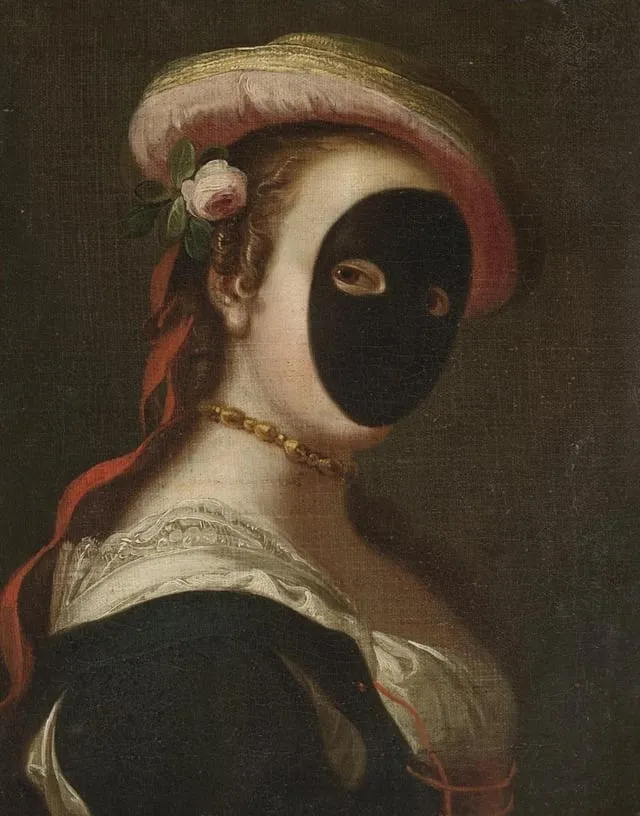
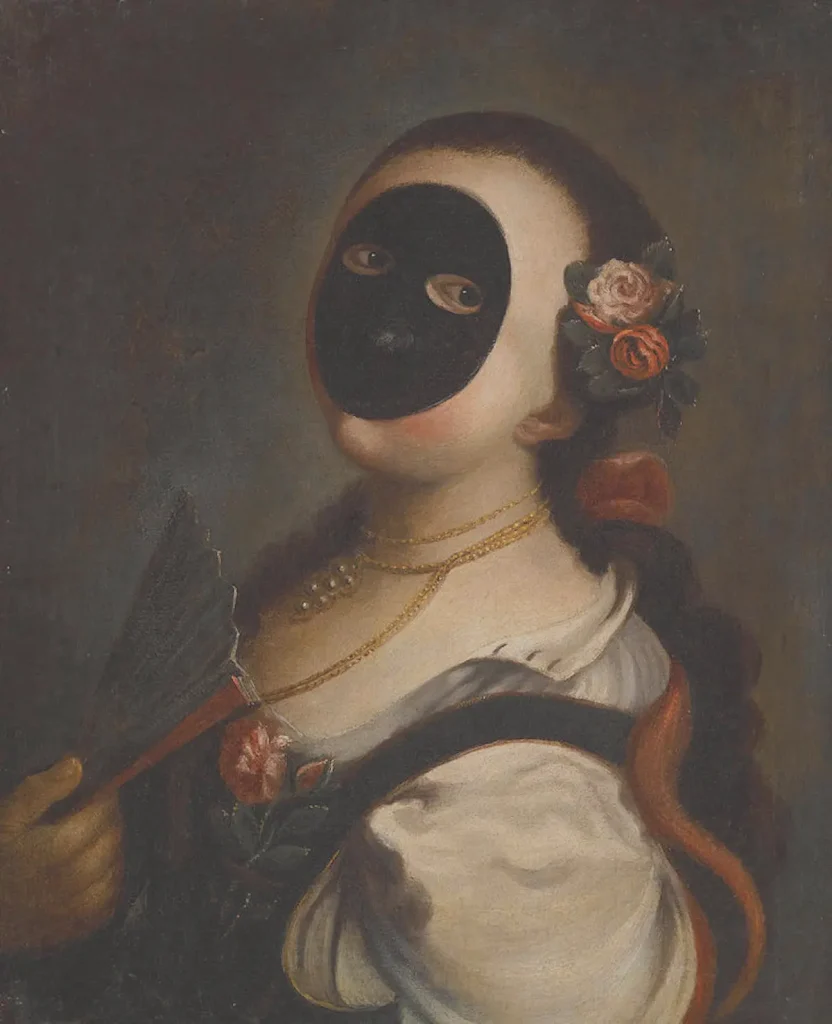
When we think of Venetian masks, we often imagine dazzling colors, feathered extravagance, and theatrical mystery. Yet among the iconic shapes that once drifted through the winding calli and glittering palazzi of the Serenissima, one stood apart in its quiet, almost intimate power: the moretta—a small, black velvet mask, oval, featureless, and mute, shaped by questions of gender, power, and visibility in 17th- and 18th-century Venice. In our modern era of performative travel and constant digital broadcast, the spirit of this silent mask offers a gentle invitation to slow down—to stop announcing our presence and, for the first time, truly see the city.
The Moretta, the Silent Companion
Among the bautas and plague doctors that once animated Venice’s public life, the moretta was the most restrained—and the most unsettling. Made to sit flush against the face and traditionally covered in black velvet, the mask had no ribbons or ties. Instead, a small internal button was held between the teeth to keep it in place.
The result was deliberate muteness.
This physical constraint transformed the wearer into a presence defined not by speech, but by gaze, posture, and movement. In a society where a woman’s voice was closely regulated, silence became a charged language of its own—an unsettling blend of concealment and attraction.
The Choice of Muteness
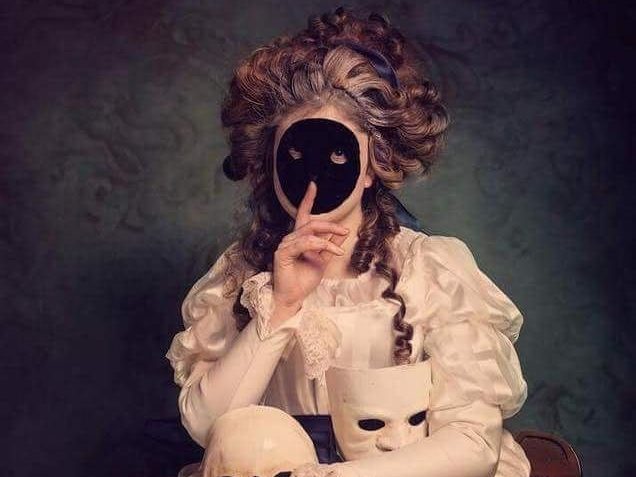
Historical descriptions preserved by Venetian workshops describe the moretta as a women’s mask—its very name deriving from moro, “the dark one.” Contemporary observers noted the striking contrast between the deep black oval and the pale skin of the face it framed, an effect that heightened visibility rather than erased it.
The absence of strings was not a mere technical curiosity. The act of biting the button turned the mask into what Venetians called the muta—the mute. Removing the moretta was therefore never casual. It was a deliberate gesture, offering not only the face, but also the voice, long associated with intimacy and trust.
The moretta did not erase identity. It suspended it—just long enough to make its return meaningful.
Republic of Disguise
To understand the Moretta, one must first understand the social architecture of the Serenissima. Venice was a republic built on hierarchy and scrutiny, yet for nearly half the year its citizens dissolved into anonymity. From December’s feast of Saint Stephen until Lent, masks were legally permitted in public life.
The art of mask-making — practiced by the guild of Mascareri since 1436 — allowed aristocrat and artisan to move indistinguishably through gambling halls, theaters, and public squares. Anonymity created a strange democracy. Reputation loosened its grip.
Yet while the angular Bauta allowed speech, eating, and political maneuvering, the Moretta required the opposite. It transformed disguise into discipline.
Moretta and the Erotics of Anonymity
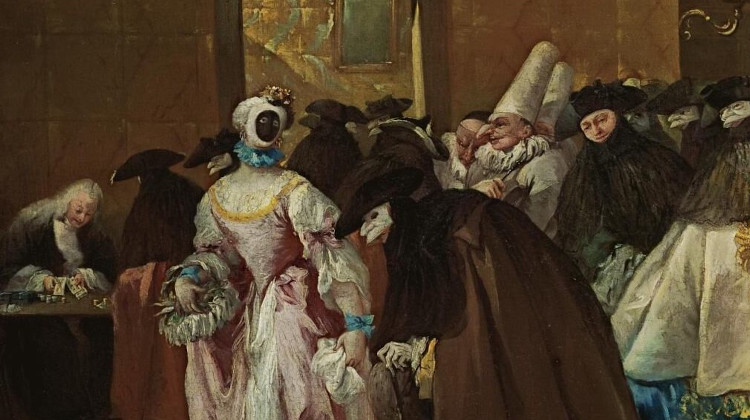
The moretta’s power lay in its paradox. By silencing the mouth, it intensified the body’s smallest gestures. The eyes, framed by black velvet, became the primary site of communication.
This quiet theatre appears vividly in the work of Pietro Longhi, whose domestic and public scenes often depict women wearing the moretta in moments of subtle interaction. In his paintings, the mask does not erase personality. Instead, it heightens tension—between looking and being looked at, between concealment and recognition.
The moretta transformed anonymity into something intimate. The mystery did not belong to the crowd. It belonged to the individual.
The Challenge of the Master: Traditional Techniques
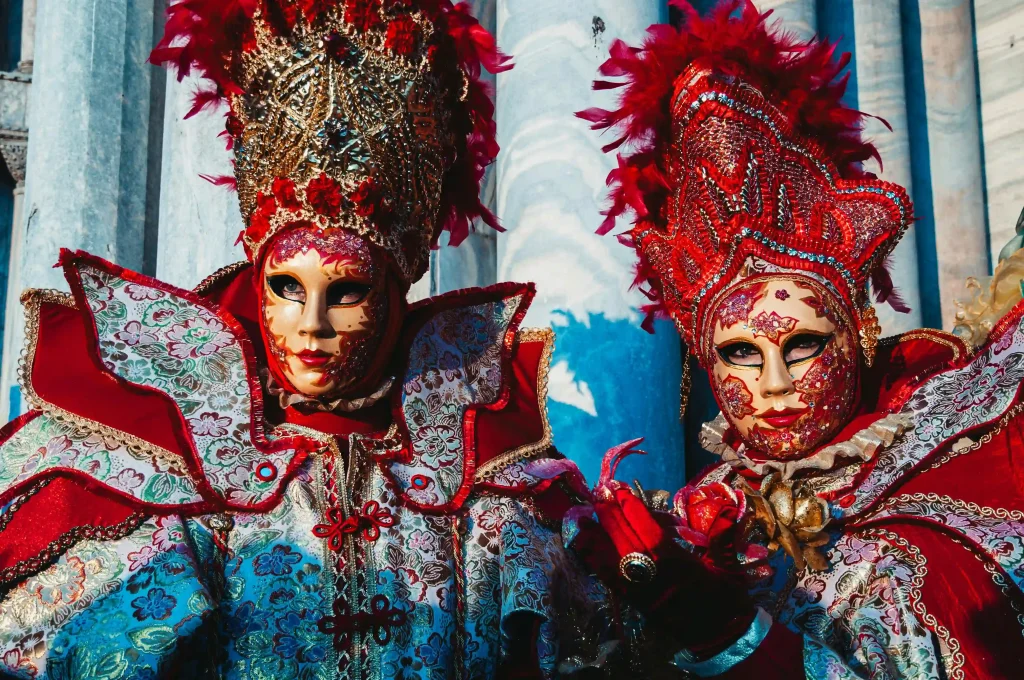
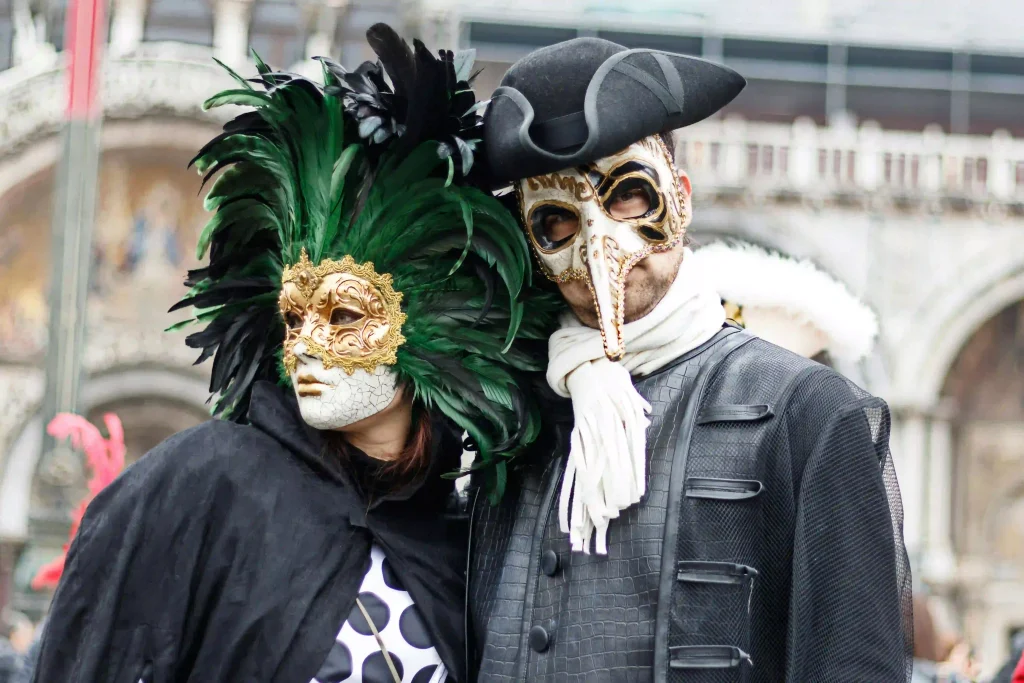
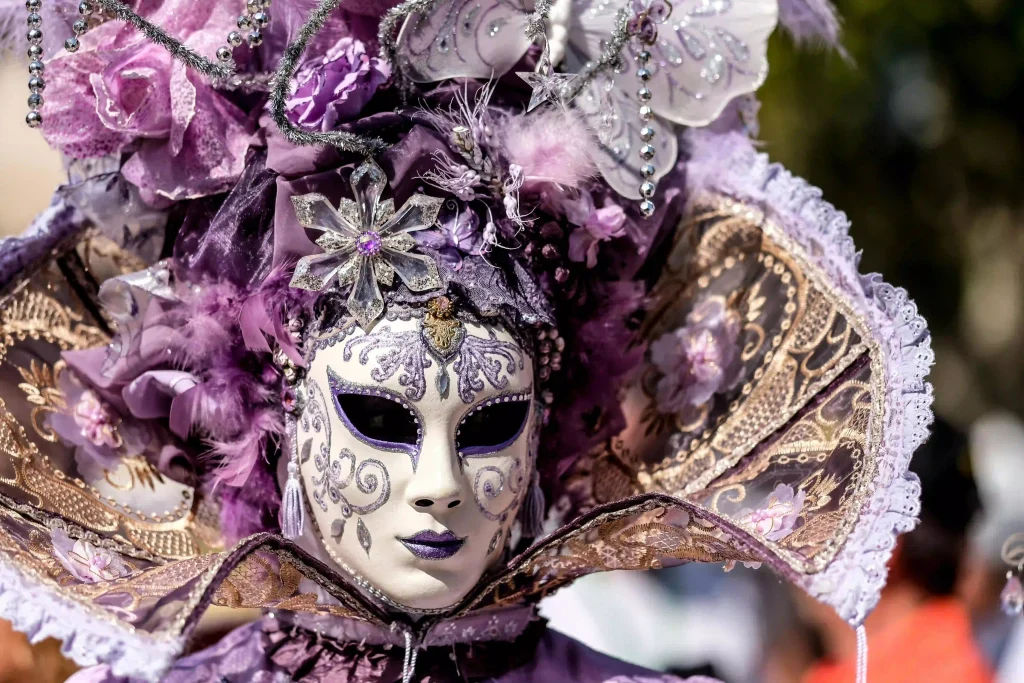
Today, Venice is engaged in a quiet war between artisanal dignity and industrial speed. A true Venetian mask is not assembled—it is formed through a slow, tactile process that leaves no room for shortcuts.
The work begins with the sculpture of a “positive” face in clay, shaped entirely by hand. From this original model, a negative mold is created by pouring plaster over the surface. Once the mold has cured, layers of cartalana—a traditional paper mixture containing wool fibres—are soaked in natural glue and pressed carefully into the mold.
This material is not chosen for convenience. It makes the mask light, breathable, and resilient, capable of conforming closely to the contours of the face without cracking. After drying, the raw mask is gently extracted and refined, its edges trimmed and surface smoothed before any decoration begins.
The moretta is particularly demanding. Because it is minimalist, there is nowhere to hide imperfections. The oval must sit flawlessly on the face. The symmetry must be precise. And the velvet—applied only after the structure is perfected—must stretch seamlessly across the surface without breaking the purity of the form.
In a city flooded with factory-made souvenirs, the true craft of the mascarero survives only through this patient, physical dialogue with material.
Where to Find the Masters
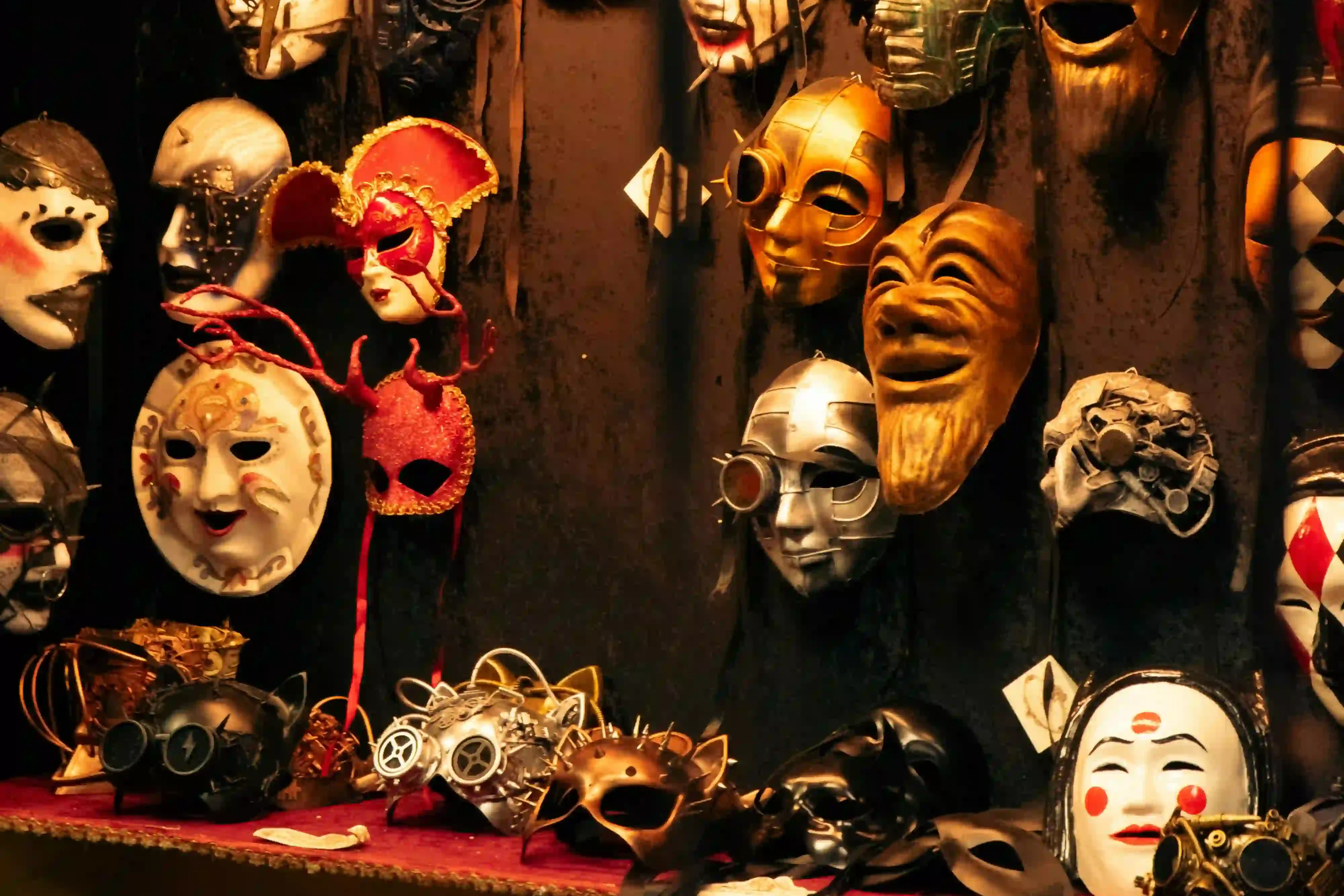
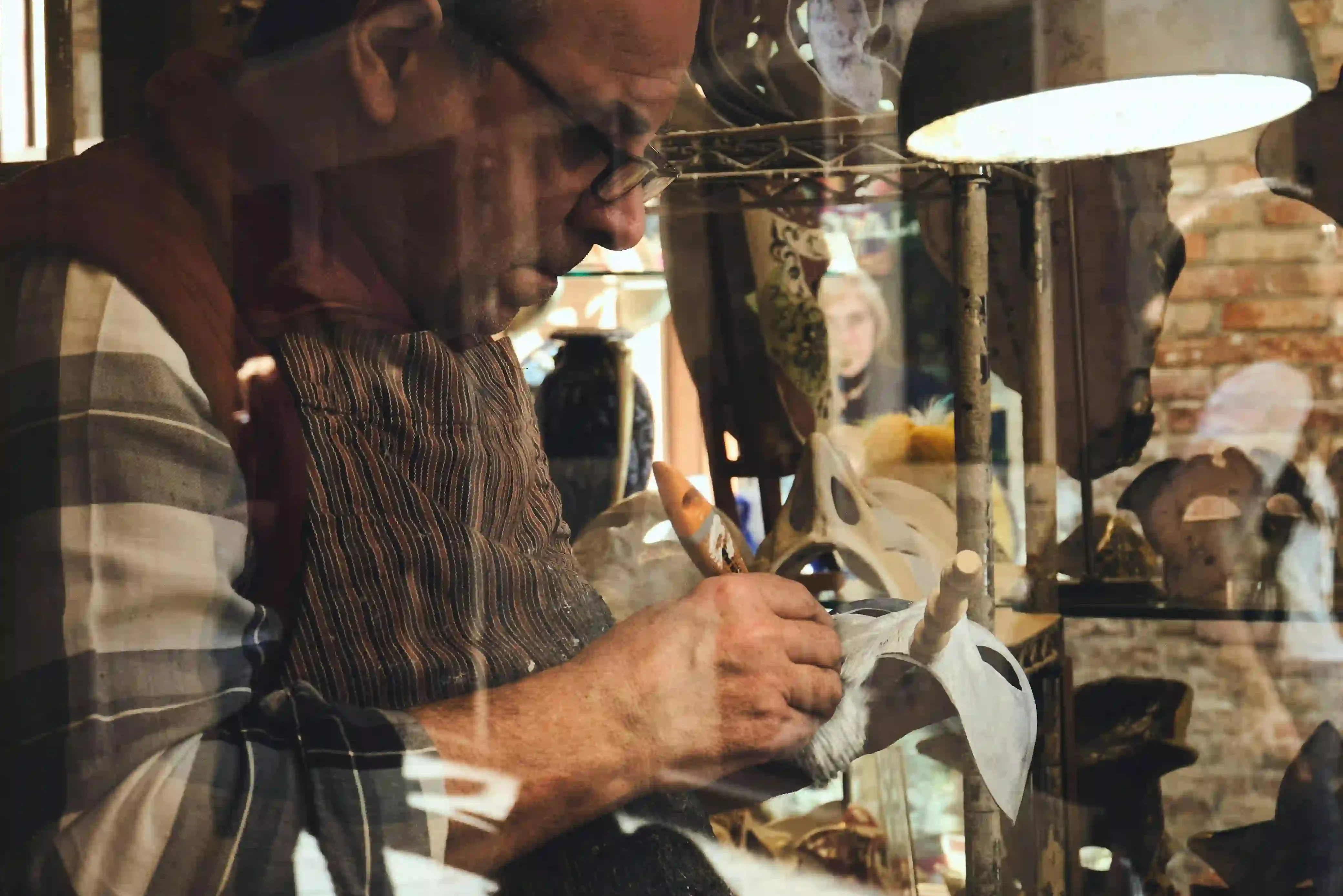
To encounter the living legacy of Venetian mask-making, travelers must seek out the few remaining ateliers still working entirely by hand in Venice.
Among the most respected is Ca’ Macana, located in the Dorsoduro district. The workshop is known for its careful historical research and for preserving the original construction of the moretta, often referred to as the “great mask of seduction.” Their reproductions follow documented forms seen in historical paintings and are crafted entirely within their Venetian studio.
Another atelier worth visiting is Kartaruga, led by Francesca Cecamore and admired for its technical rigor and refined, almost cinematic finish. Each mask reflects an obsessive attention to surface, proportion, and material integrity.
For those who view the mask as both object and performance, La Bottega dei Mascareri, run by master mask-maker Sergio Boldrin near the Rialto area, offers a deeply personal approach, where the mask becomes a bridge between theatre, memory, and contemporary artistic expression.
To support a wider ecosystem of authentic Venetian craftsmanship, travelers can also consult Venezia Autentica, a community-driven platform connecting visitors with independent artisans and family-run businesses across the city.
Moretta’s Challenges for your next trip:
- Delay the narration. Walk for at least thirty minutes without taking photos, recording stories, or opening your phone. Let the first layer of the city reach you before you turn it into content.
- Choose one street and slow down. Instead of moving from landmark to landmark, follow a single narrow calle and allow yourself to drift—pause at small bridges, shop windows, doorways, and courtyards.
- Practice silent observation. Sit by the water or on a quiet square and watch without commentary. Notice how footsteps echo, how boats pass, how voices fade and return. Let sound replace explanation.
- Let your senses lead, not your checklist. Pay attention to light on stone, reflections on the canal, and the rhythm of everyday movement. Resist the urge to search for what you are “supposed” to see.
- Receive the place instead of performing it. Treat the city not as something to produce stories from, but as something to listen to. The moretta reminds us that being a good guest begins with attention, not exposure.



Looking for something different to see the city.