Heritage in Danger: How War Is Erasing the Middle East’s Shared Past
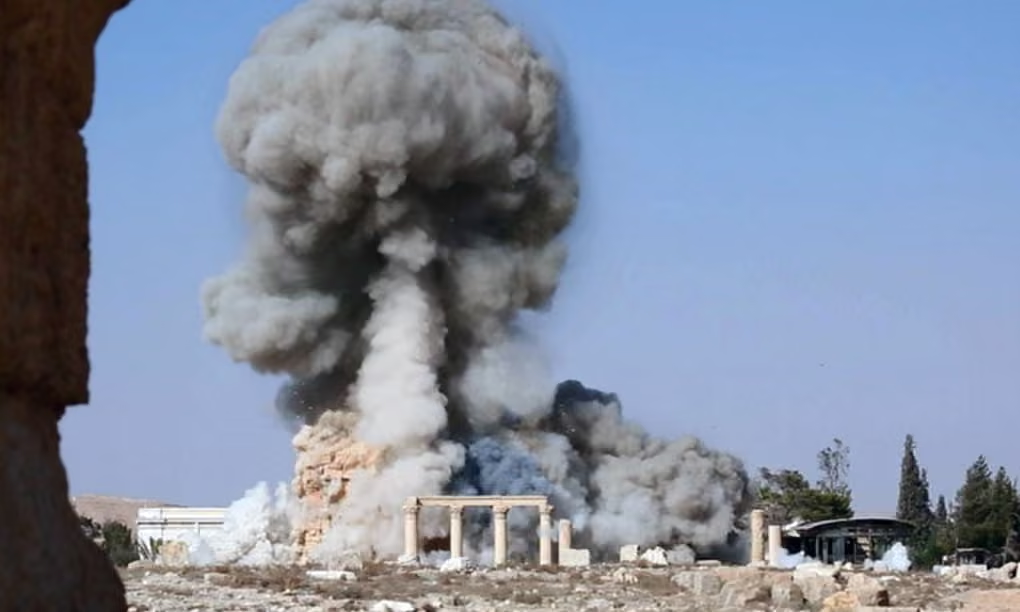
The geography of the Middle East is currently being rewritten, not by cartographers, but by the relentless machinery of modern warfare. As of 2026, the scale of loss is staggering: thousands of historical sites—from Roman necropolises to medieval citadels—have been damaged, looted, or reduced to literal dust. This is the “sad truth” of our era: we are witnessing a systematic erasure of the touchstones of human identity. While the world’s attention is currently fixed on the escalating tensions and potential for catastrophic damage to Iran’s incomparable Persian heritage—home to 27 UNESCO World Heritage sites—the precedent set in Gaza, Yemen, and Syria offers a grim preview of what happens when cultural landscapes are caught in the crossfire. This is no longer just a series of regional conflicts; it is an international cultural emergency where centuries of our shared past are being deleted in seconds.
Iran: The High Stakes of Persian Heritage
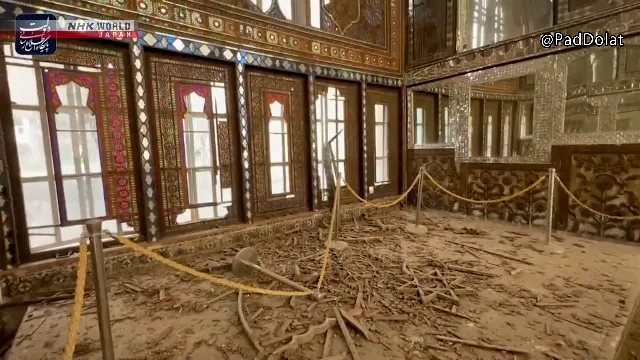
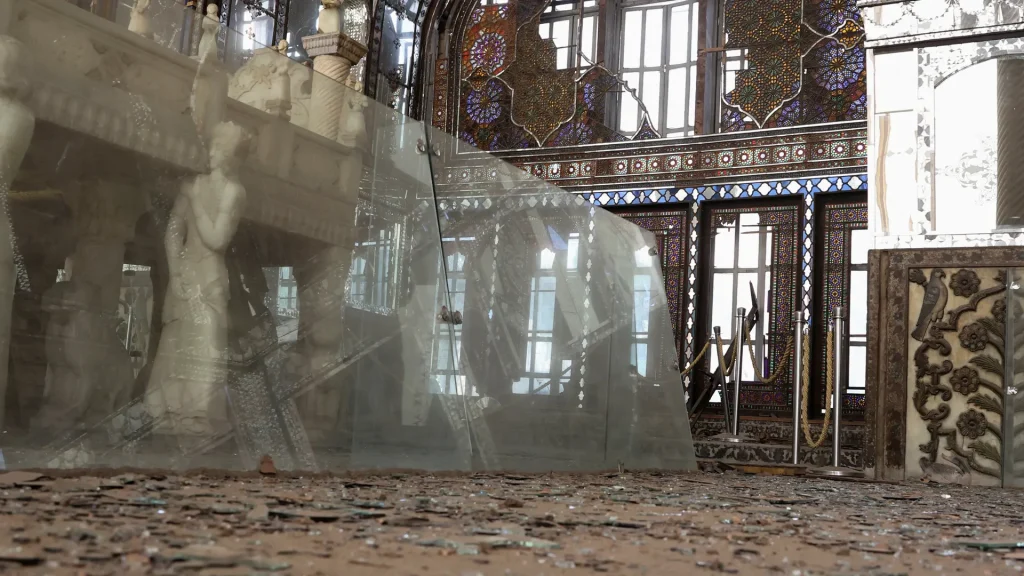
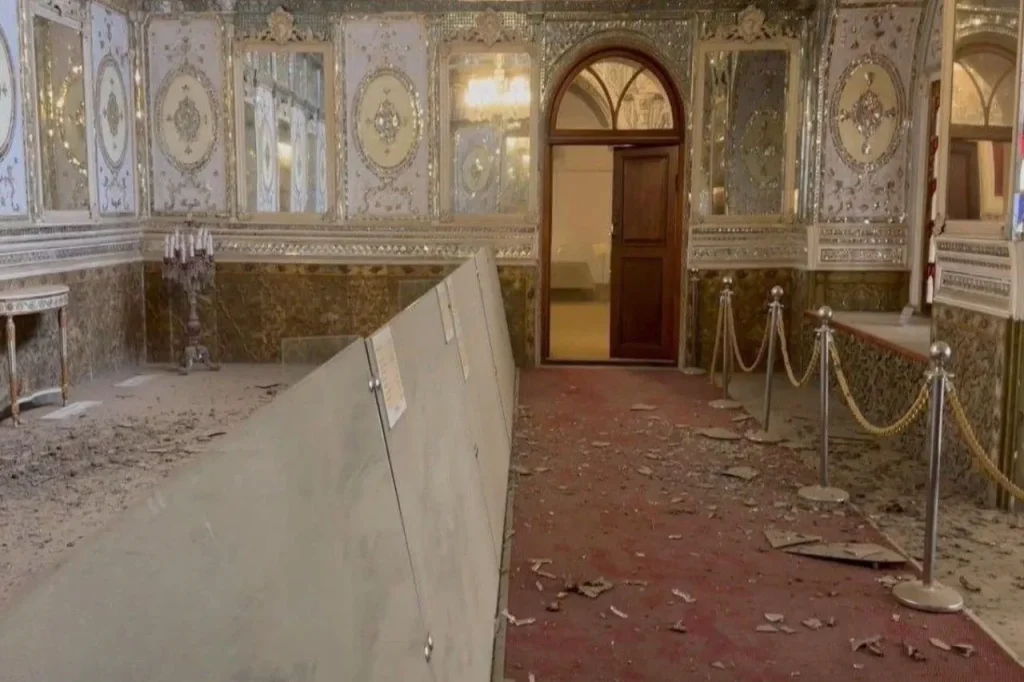
Iran stands as one of the world’s most significant cultural repositories, hosting UNESCO World Heritage sites that chronicle the rise of the Persian Empire and the flowering of Islamic architecture. However, as conflict intensifies, these sites face an unprecedented double threat: intentional targeting and accidental “collateral” damage.
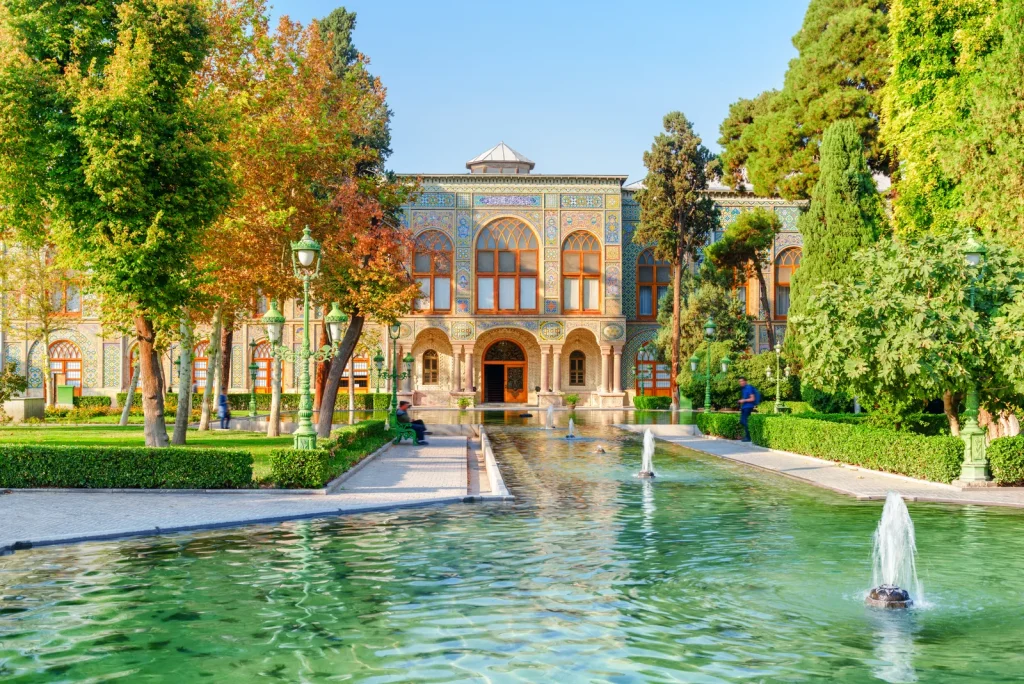
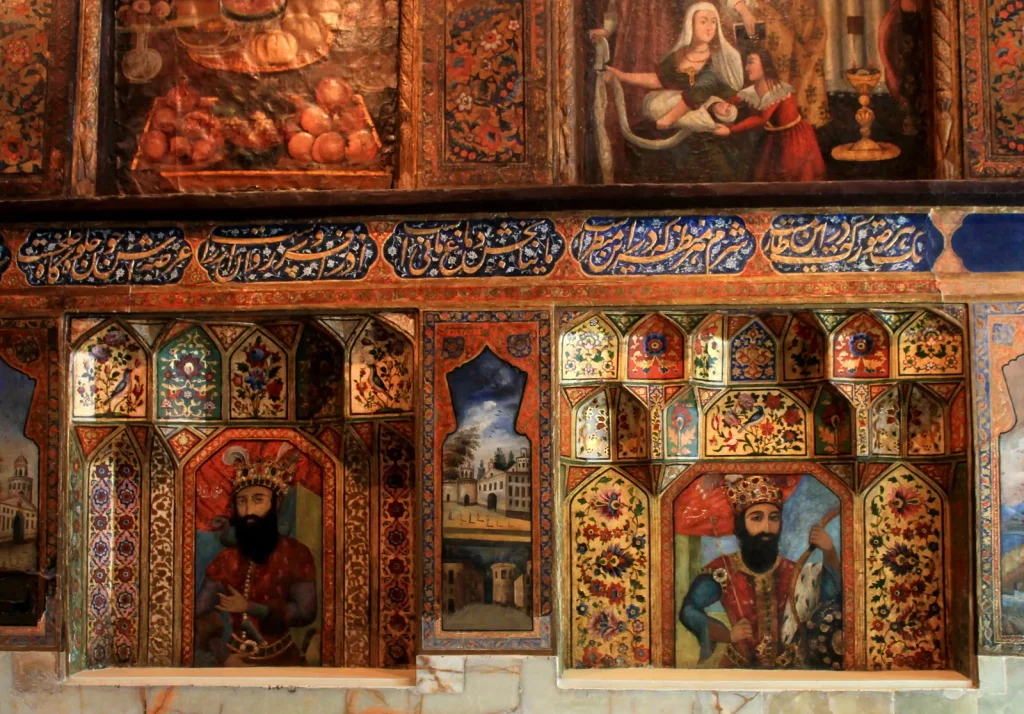
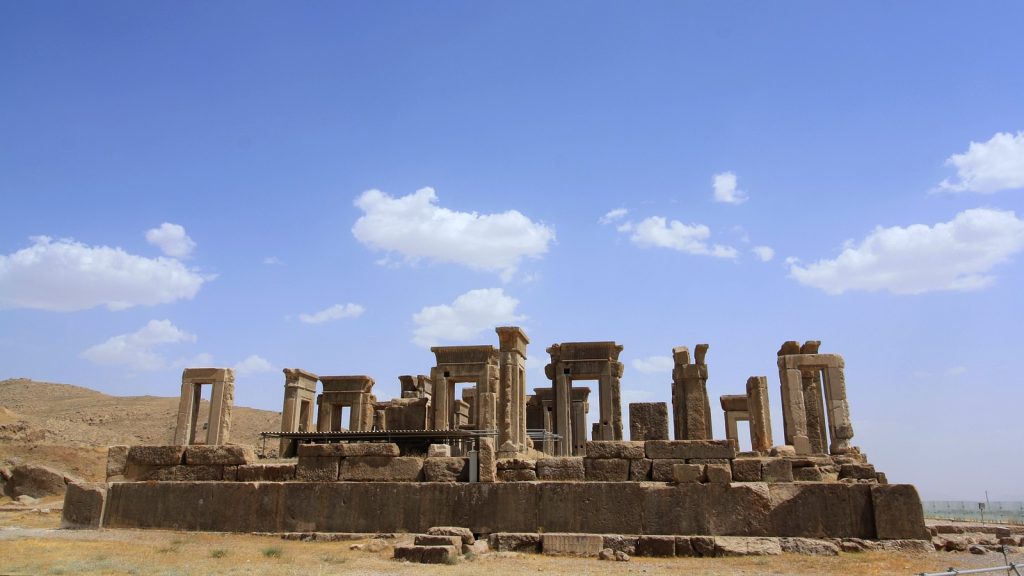
The Golestan Palace, a masterpiece of the Qajar era in the heart of Tehran, remains a symbol of national pride that sits precariously close to modern infrastructure. Beyond the capital, the stakes are even higher. Persepolis, the ceremonial capital of the Achaemenid Empire founded in 518 BC, is perhaps the most iconic symbol of Persian identity. Its proximity to regional military installations puts its 2,500-year-old bas-reliefs and grand staircases at extreme risk of vibration damage from nearby explosions.

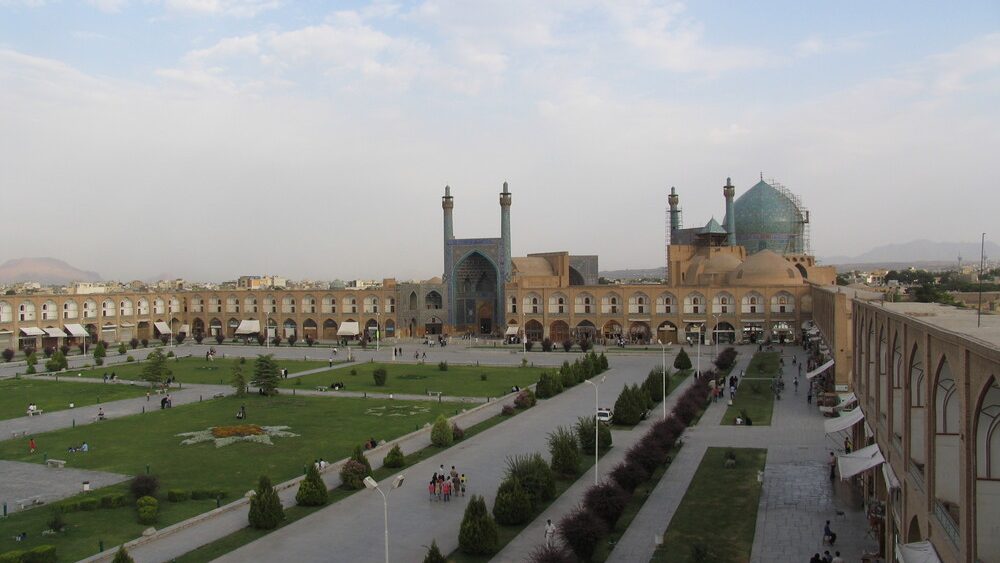
In Isfahan, the Meidan Emam, often called “Half the World,” is a 17th-century square surrounded by architectural jewels like the Shah Mosque and Ali Qapu Palace. In an era of precision missiles, even a minor targeting error or a localized skirmish could obliterate the delicate blue-tiled domes that have defined the skyline for centuries. The “sad truth” of the current standoff is that these sites are often located near strategic urban or military hubs. Whether through deliberate psychological warfare or the accidental drift of a projectile, the erasure of Persian history is now a daily possibility.
Gaza: A Cultural Landscape in Ruins
To walk through the Gaza Strip today is to move through a territory where the layers of time have been violently folded into one another. Gaza is a place with a history stretching back thousands of years, yet since the conflict erupted in late 2023, it has endured a level of urban destruction that defies easy comprehension. UNESCO has verified that more than 150 heritage sites have been damaged in this tiny, densely packed area.
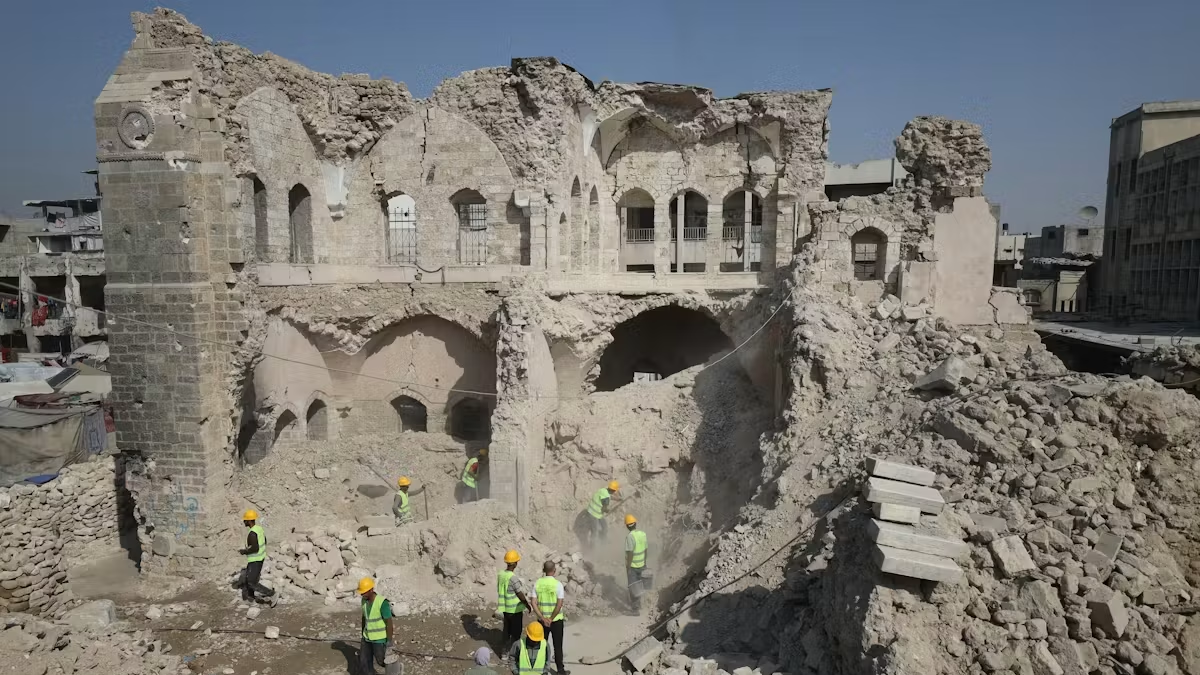
The loss is perhaps most palpable at the Great Omari Mosque in Gaza City. Once a beacon of Islamic architecture with roots reaching back to the seventh century, it was more than a place of worship; it was a sanctuary of knowledge. Its library once housed roughly 20,000 historic books and manuscripts covering medicine, law, and literature. Today, it lies in ruins. There is a profound, quiet tragedy in the image of volunteers struggling to salvage charred manuscripts from the rubble—fragments of an intellectual history that chronicled millennia.
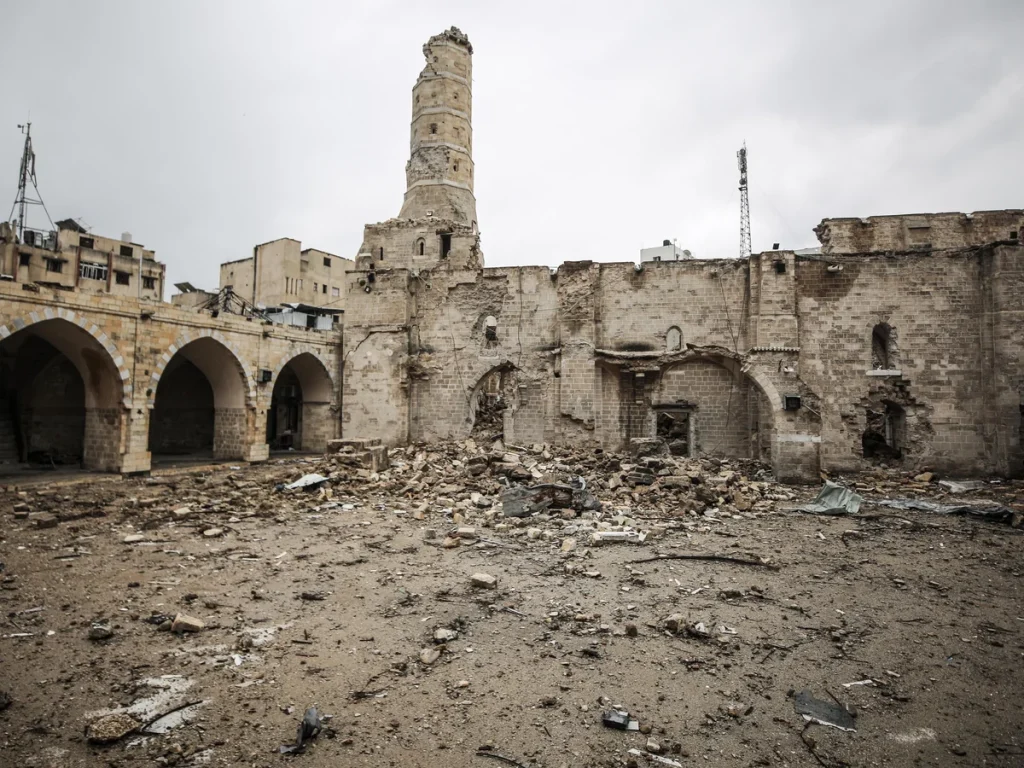
The destruction extends across every era of Gaza’s long life:
- Qasr al-Basha (Pasha’s Palace): This Mamluk and Ottoman-era palace, which served as a museum in the old quarter, was heavily damaged or destroyed during military operations.
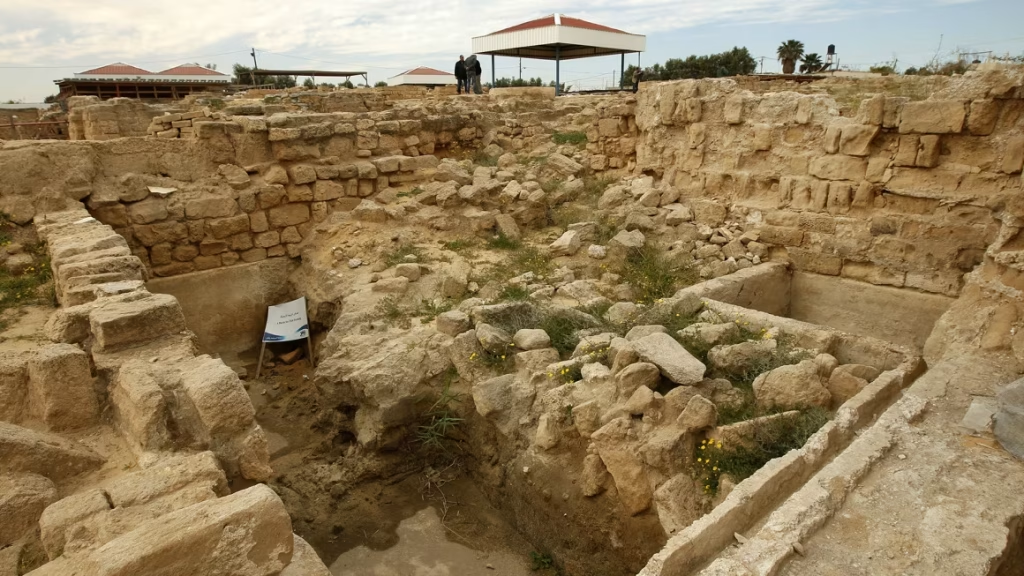
- Ard-al-Moharbeen Necropolis: A recently discovered Roman cemetery where the dirt was barely brushed off the stones before archaeological work was cut short by the intensifying conflict. The site has since suffered significant damage.
- Saint Hilarion Monastery: Located at Tell Umm Amer, this 4th-century early Christian site has been placed on UNESCO’s List of World Heritage in Danger as a desperate plea for its survival.
- Al Qarara Cultural Museum: Founded as recently as 2016 to celebrate local archaeology, the museum and its thousands of artifacts were completely obliterated.
Yemen: The Crumbling Towers of the High Desert
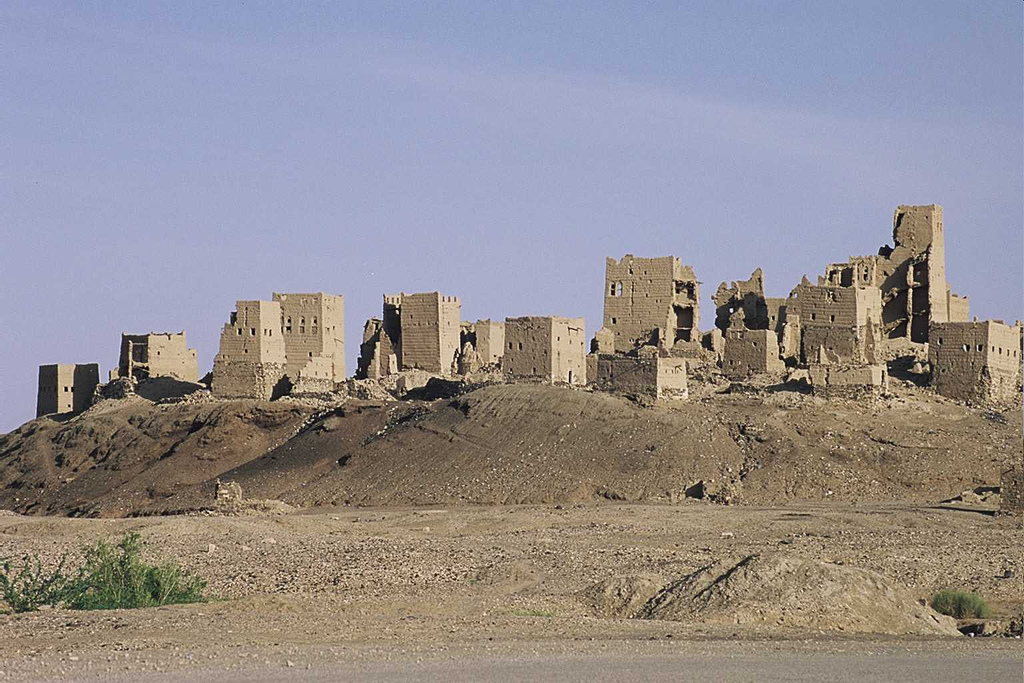
Further south, the long-running civil war in Yemen has taken a similarly dramatic toll on a landscape that feels like it belongs to a storybook. Yemen’s heritage is vertical—a world of towering mudbrick “skyscrapers” and mountain-top citadels that have stood for centuries.
The Old City of Sana’a, a UNESCO World Heritage site, is famous for its intricately decorated mudbrick houses. However, years of shelling and explosions have turned many of these historic homes into piles of earth. In the ancient fortified town of Barāqish, the Temple of Nakrah—dating back to the 6th century BC—was bombarded, losing pieces of a puzzle that had remained intact since the days of the spice trade.
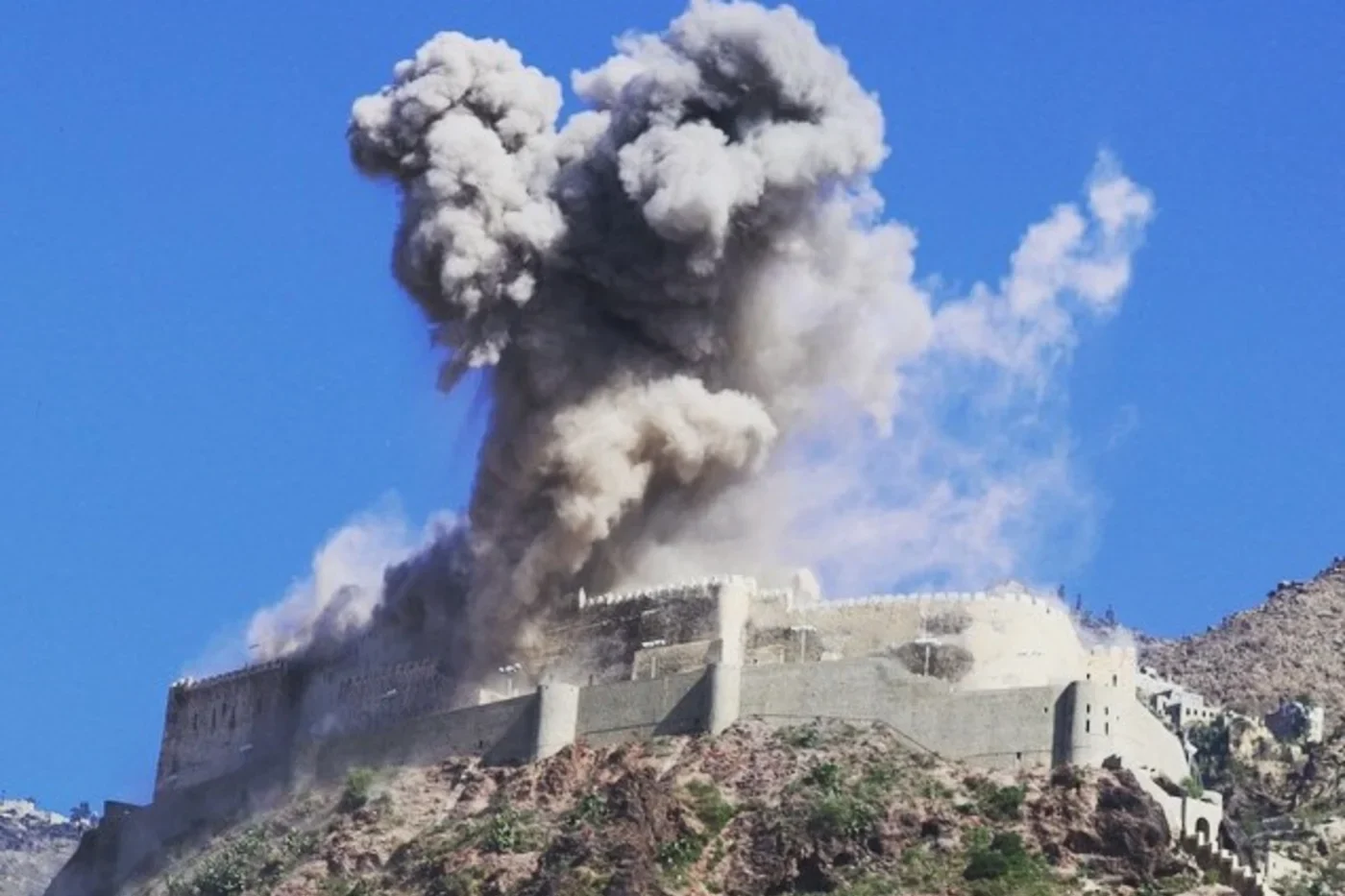
In Taiz, the Al-Qahira Castle, a 12th-century citadel that has watched over the city for nearly a millennium, was seriously damaged by airstrikes. Today, entire historic towns—Sana’a, Shibam, and Zabid—sit on the List of World Heritage in Danger. In Yemen, the war isn’t just hitting individual monuments; it is dissolving the foundations of entire communities who see their ancestral homes literally melting away.
The Scars of Syria and Iraq
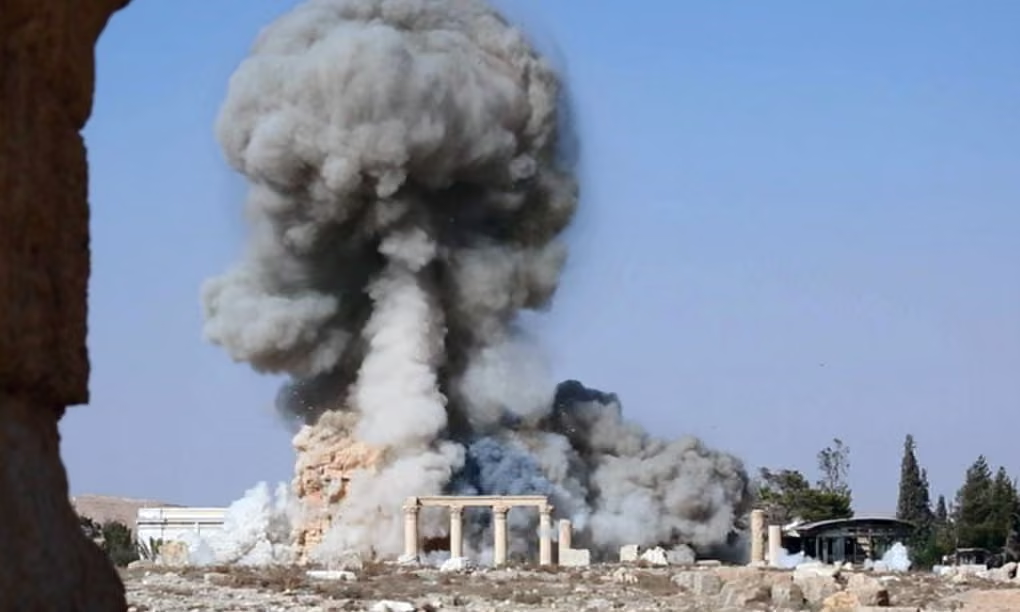
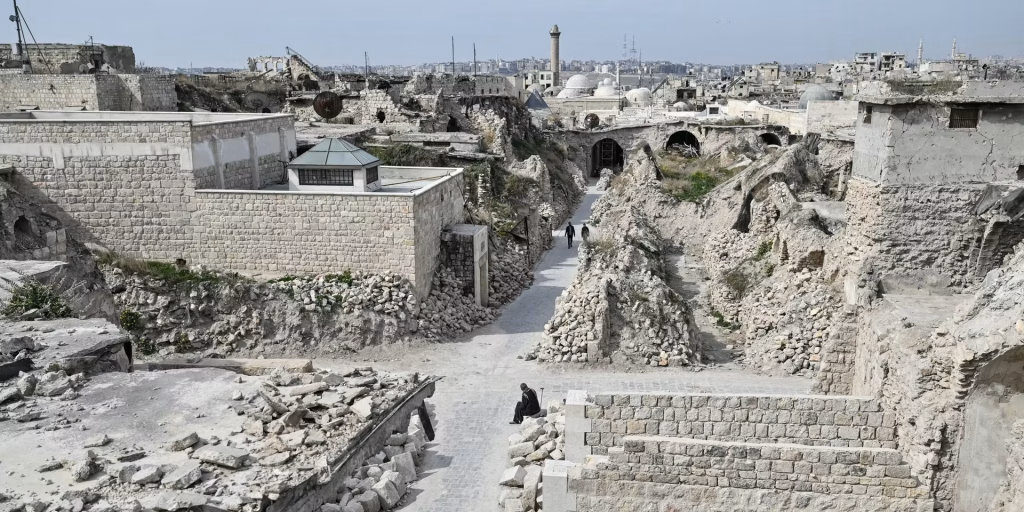
The current destruction is an echo of the devastation seen in Syria and Iraq over the last two decades. In Syria, the names of world-famous sites like Palmyra, Ancient Aleppo, and Bosra became synonymous not with tourism, but with the “deliberate destruction” by armed groups. From the shelling of medieval souks to the systematic looting of archaeological sites, the civil war in Syria transformed some of the world’s most significant cultural hubs into cautionary tales.
Similarly, Iraq’s heritage has been ravaged by successive conflicts, leading to the loss of ancient mosques and palaces that once represented the cradle of civilization. These are not just “old buildings”; they are the irreplaceable links to the very beginning of the human story.
Why the Stones Still Matter
It is a common refrain in times of war: Why care about stones when people are dying? But cultural heritage is not a luxury; it is a social anchor. When a community loses its heritage, it loses the physical evidence of its identity. This erases the communal memory that allows a society to heal and rebuild after the guns go silent. Losing these sites often deepens the trauma of conflict, making post-war recovery infinitely more difficult because the “place” people return to no longer recognizes them.
International law, specifically the 1954 Hague Convention, was designed to prevent this very catastrophe. It requires parties to respect and safeguard cultural property even during hostilities. Yet, as we see in Gaza and Yemen, enforcement in an active war zone is a monumental challenge.
The Road to Recovery
The road back is long and begins with the difficult work of surveying what remains. Before restoration can happen, sites must be stabilized and local communities must be supported in their efforts to conserve what is left of their history. Organizations like UNESCO and various international partners are working on emergency response plans, but these efforts are fragile and require sustained political will and, ultimately, peace.
For the traveler and the observer, our role has shifted. We can no longer look at these maps with the detachment of a sightseer. Instead, we are called to a practice of witnessing and honoring history. Every story told about a fallen minaret and every effort to document a crumbling wall becomes part of an unfinished atlas of what we have lost—and what we must still fight to save.